Prepare the Steaming Pot: Place a trivet or steamer insert in the bottom of a tall stockpot and add enough water to reach 1 1/2 inches above the trivet. Cover the pot tightly and bring the water to a simmer over medium-high heat. Prepare the Cans: Coat three 14.5- to 15-ounce cans, approximately 4 inches tall and 2 3/4 inches wide, with cooking spray. Place a round piece of parchment paper in the bottom of each can. Combine the Dry Ingredients: In a medium bowl, whisk together the rye flour, raisins, fine cornmeal, baking soda, and kosher salt until the ingredients are evenly distributed.
Make the Batter: Add the buttermilk and blackstrap molasses to the dry mixture and whisk just until everything is combined. Avoid overmixing.
Fill the Cans: Divide the batter evenly among the three prepared cans, using about 1 cup (200 g) of batter per can. Make sure the batter fills each can no more than two-thirds full. Cover the Cans: Place a small square of foil over the top of each filled can to create a lid, then secure the foil firmly with a heavy-duty rubber band or string.
Position the Cans: Carefully place the covered cans upright on the trivet inside the pot. The water should reach approximately halfway up the sides of the cans; if it does not, add additional hot water. Steam the Bread: Cover the stockpot and return the water to a simmer over medium-high heat. Reduce the heat to medium-low and gently simmer the cans for 35 to 40 minutes. Check for Doneness: The bread is ready when it is set and gently pulling away from the sides of the cans. A skewer inserted into the center should come out with moist crumbs, while a thermometer inserted into the center should register between 200°F and 205°F. Remove and Cool: Using tongs, carefully remove the cans from the pot and place them on a cooling rack.Remove the foil lids and allow the bread to cool in the cans for 20 to 30 minutes. Release the Loaves: Turn each can upside down and tap the bottom with the heel of your palm to release the bread. Transfer the loaves to a wire rack. Cool Completely: Let the loaves cool completely on the wire rack for about 1 hour before serving.
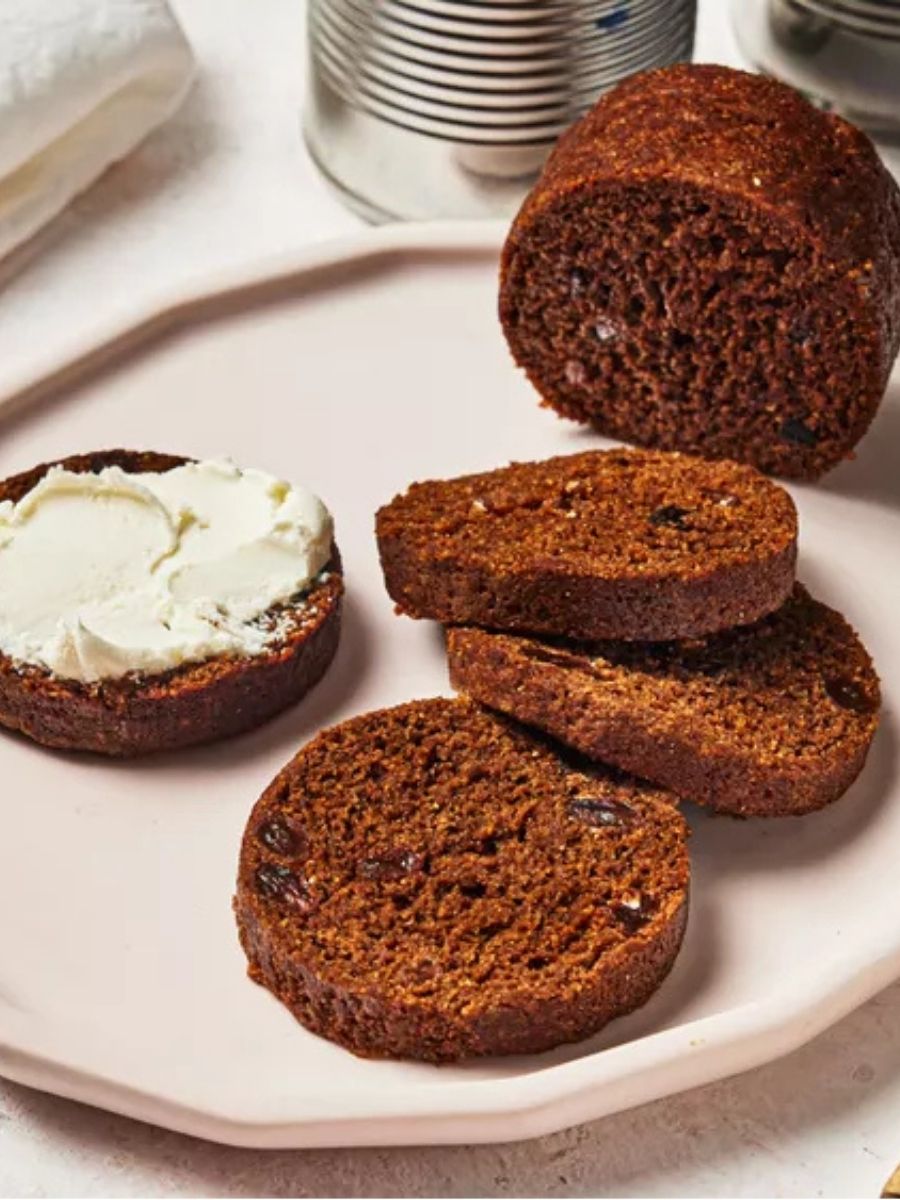
Serve and Rest: Serve the bread plain or toasted with cream cheese. For the best flavor, preferably allow the cooled loaves to rest until the next day so the flavors can meld and improve.