Combine Flour and Sugar: Place the all-purpose flour in a large mixer bowl, then dissolve the sugar in the warm water.
Activate the Yeast: Make a well in the center of the flour, pour in the lukewarm water, and add the active dry yeast. Leave the mixture undisturbed for 5 minutes to allow the yeast to activate.
Begin Kneading: Fit the mixer with a dough hook and knead the mixture until the ingredients come together into a dough.
Add Salt: Add the salt and continue kneading the dough for 5 minutes.
Incorporate the Fat: Add the olive oil or lard and knead for another 3–4 minutes, or until the dough becomes smooth.
First Rise: Cover the bowl with a kitchen towel and let the dough proof for about 1 hour, or until it has doubled in size.
Divide the Dough: Transfer the risen dough to a floured work surface, roll it into a log, and cut it into 6 equal portions.
Shape the Dough Balls: Shape each portion into a smooth ball by cupping your palm over the dough and moving your hand in a circular motion; the friction from the work surface helps create a smooth shape.
Flatten the Dough: Sprinkle the dough balls with flour, then use your hands to press each one into a flat round approximately 6 inches in diameter.
Second Rise: Arrange the flattened dough rounds on a flour-dusted baking tray, cover them, and let them proof for 15 minutes.
Preheat the Oven: While the dough proofs, preheat the oven to 500°F.
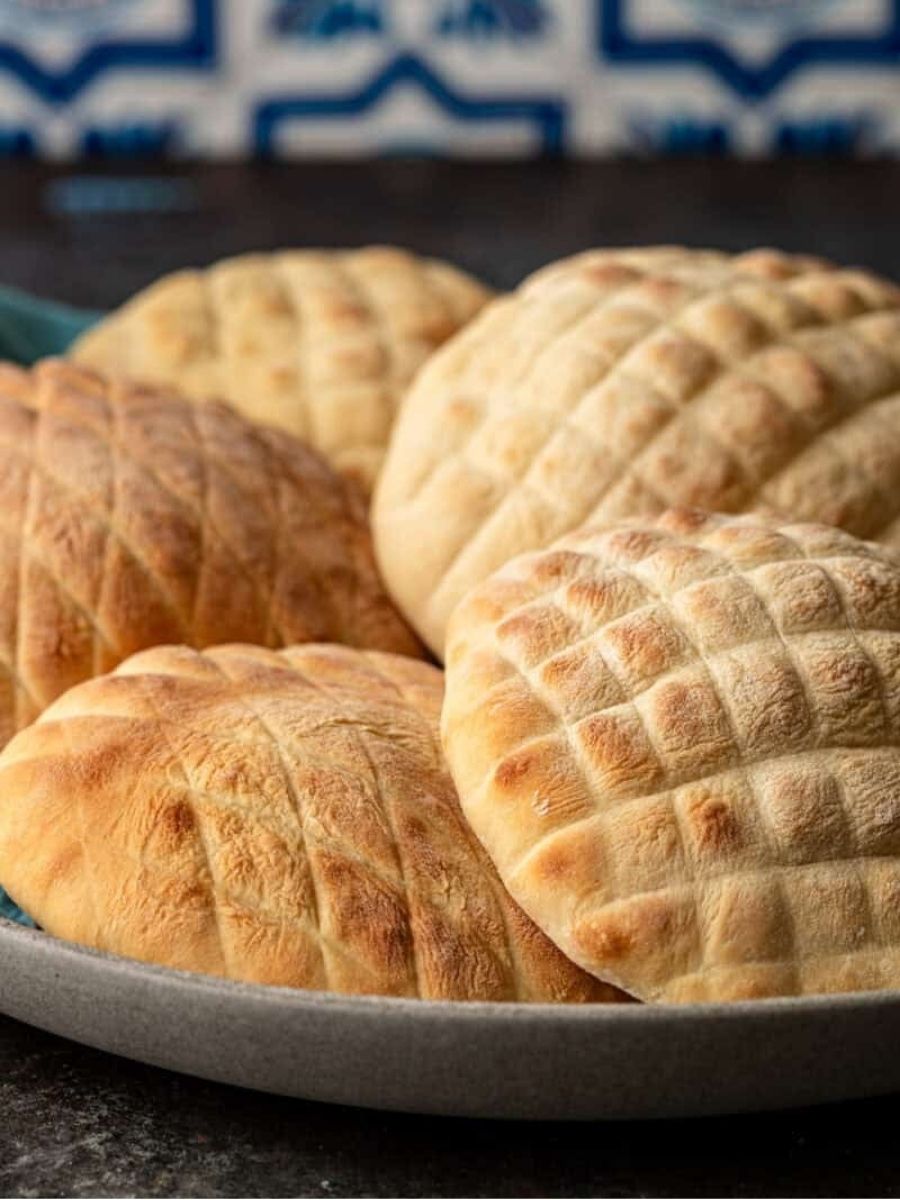
Create the Diamond Pattern: Using the spine, or dull side, of a knife, gently press lines across the surface of each dough round to create the characteristic diamond pattern.
Bake the Lepinja: Bake one tray at a time for 8–10 minutes, or until the tops are golden.
Soften the Crust: Transfer the baked lepinja to a wire rack, gently splash the tops with water, and immediately cover them with a kitchen towel to help keep the bread soft.
Serve: Serve the lepinja warm or at room temperature.