Go Back
Donna R. Luis

Classic Middle Eastern Chicken Pilaf

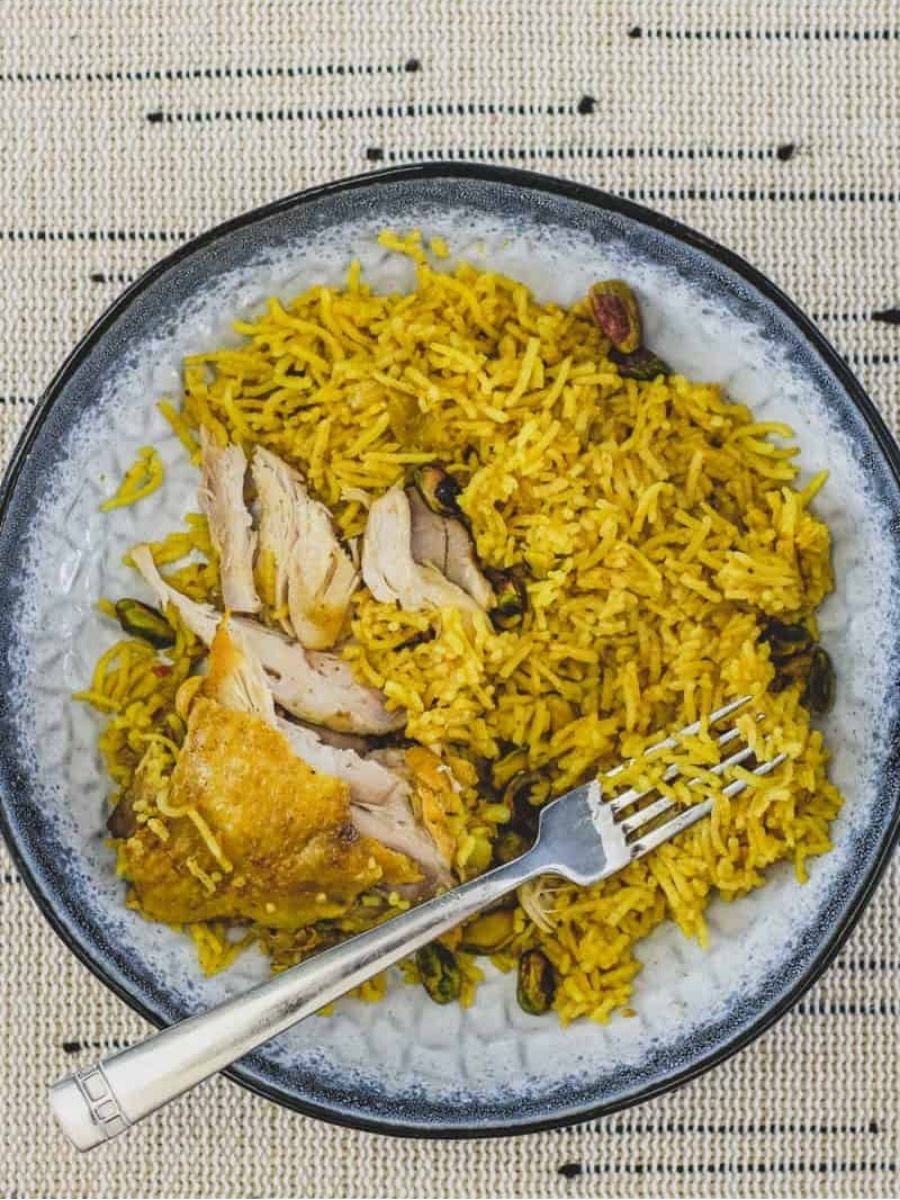
A comforting one-pan chicken and rice dish featuring tender chicken, fragrant basmati rice, warm baharat spices, and toasted pistachios. The result is flavorful, aromatic, and wonderfully fluffy.
Prep Time 10 minutes
Cook Time 50 minutes
Resting Time 30 minutes
Total Time 1 hour 30 minutes
Servings: 4
Course: Main Course
Cuisine: European

Ingredients
  

  • 2 tbsp olive oil
  • 1 whole chicken about 2.5 lb, cut into 8 pieces, or 8 chicken thighs
  • 1 medium onion peeled and thinly sliced
  • 2 garlic cloves peeled and chopped
  • 1 tsp baharat powder
  • 1 tsp coriander powder
  • ½ tsp turmeric
  • tsp salt
  • ½ tsp black pepper
  • ½ cup finely chopped tomato
  • 2 cups basmati rice soaked in cold water for 30 minutes
  • 4 cups chicken stock homemade or store-bought
  • ½ cup pistachio nuts
  • 2 tbsp unsalted butter
  • ¼ cup water as needed if the onion begins sticking
  • ½ cup water for cooking the chicken

Equipment

  • Large, heavy-bottomed frying pan or wide lidded pot
  • Lid that fits the pan or pot securely
  • Small frying pan for toasting the pistachios
  • Wooden spoon
  • Colander or fine-mesh strainer for draining the rice
  • Clean tea towel
  • Paper towels
  • Measuring spoons and measuring cups

Method
 

  1. Brown the Chicken: Heat the olive oil over medium heat until hot. Working in two batches, add the chicken pieces and brown both sides for about 4–5 minutes per side. Transfer the browned chicken to a plate and set aside.
  2. Soften the Onion: Add the sliced onion to the same pan. If the onion or browned bits begin sticking, add up to ¼ cup water. Cook for about 4–5 minutes, stirring, until the onion softens.
  3. Build the Spice Base: Add the chopped garlic and cook for 1 minute. Stir in the baharat, coriander, turmeric, salt, black pepper, and chopped tomato. Mix everything together and gently fry for about 1 minute.
  4. Simmer the Chicken: Return the browned chicken to the pan and add about ½ cup water. Turn the chicken through the sauce so it becomes coated, then cover the pan. Reduce the heat to medium-low and cook for 15 minutes, keeping the mixture at a gentle bubble rather than a vigorous boil. Stir occasionally.
  5. Add the Rice: Drain the soaked basmati rice thoroughly, then add it to the pan. Briefly stir the chicken through the rice, then immediately pour in the chicken stock. Gently shake the pan so the ingredients become submerged, taking care not to stir the rice further.
  6. Cook the Pilaf: Bring the mixture to a simmer, then reduce the heat to low so the rice is barely bubbling. Cover the pan and cook for 25–30 minutes, or until the liquid has been absorbed.
  7. Check for Dryness: If liquid remains after 25–30 minutes, use a wooden spoon to make a few holes down toward the bottom of the pan. Continue cooking for a few more minutes until the remaining liquid has evaporated.
  8. Finish the Rice: Remove the pan from the heat once the liquid has disappeared.
  9. Toast the Pistachios: While the rice cooks, melt the butter in a small frying pan over medium heat. Add the pistachios and fry for 1–2 minutes, until they are just beginning to brown. Transfer them to paper towels to drain and cool, then leave them whole or chop them.
  10. Rest for Fluffy Rice: Remove the lid from the cooked pilaf and place a clean tea towel over the pan. Replace the lid over the towel, wrapping the towel around the lid. Leave the covered pan to rest for 30 minutes; this resting period helps give the rice its fluffy texture.
  11. Serve: Remove the tea towel and serve the rested chicken pilaf directly from the pan.
Notes

  • Soak the basmati rice in cold water for 30 minutes before cooking for a fluffier result.
  • For best results, rinse the rice three times in cold water until the water runs clear before soaking.
  • Brown the chicken in two batches so the pieces have room to develop color on both sides.
  • If the onions begin sticking to the pan, add up to ¼ cup water and continue cooking.
  • Keep the rice at a gentle simmer once the stock is added, and avoid unnecessary stirring.
  • If liquid remains after the suggested cooking time, make a few holes down toward the bottom of the pan and cook for a few additional minutes.
  • The 30-minute covered resting period is important for developing the desired fluffy rice texture.
  • The cooked pilaf can stay fresh on the stovetop for about an hour.
  • Refrigerate leftovers for 4–5 days in the covered pan or airtight containers.
  • To freeze, portion the pilaf into airtight containers. When reheating from frozen in the microwave, adding 1–2 tablespoons of water can help prevent it from drying out.
  • For a different spice profile, the source suggests experimenting with spice blends such as shawarma, berbere, or Cajun.