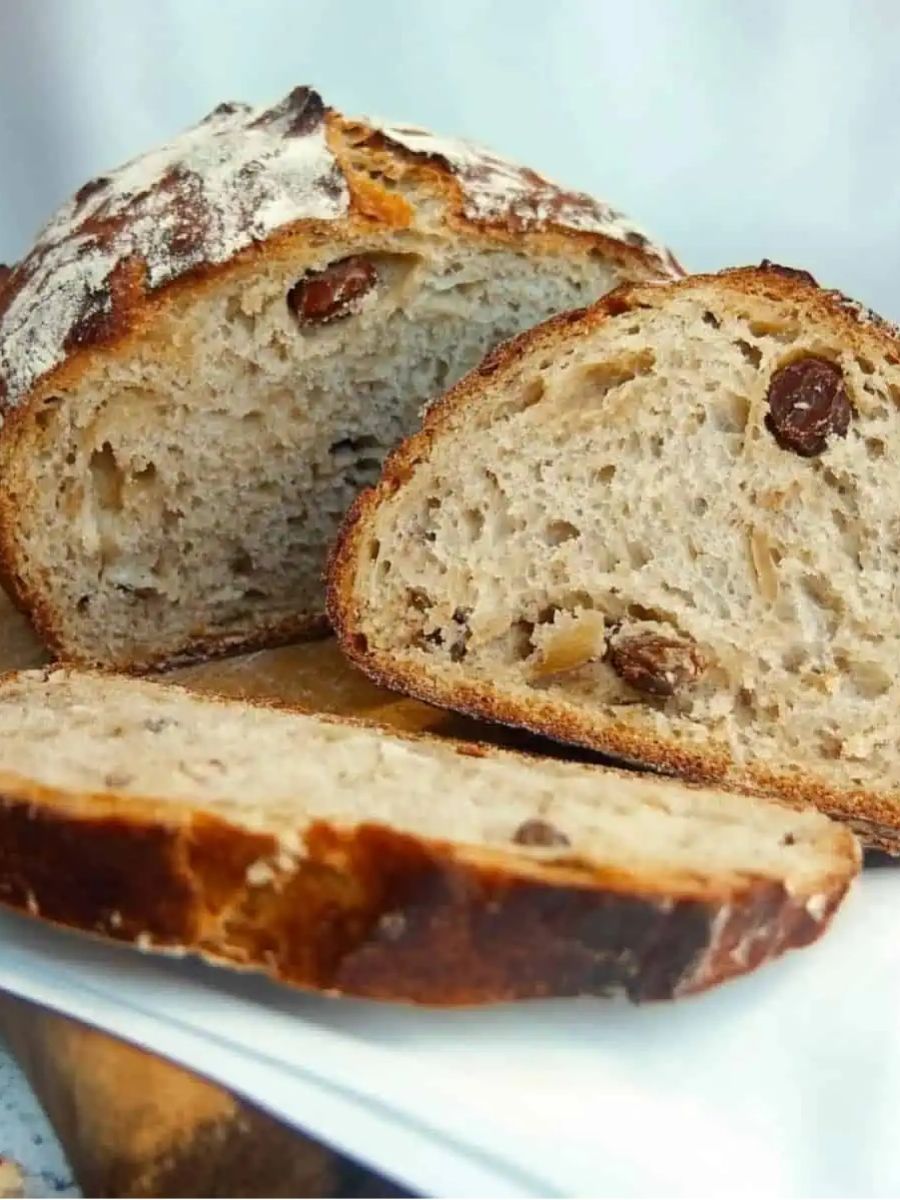

Ingredients
Equipment
Method
Thermomix Method
- Activate the Yeast: Add the water, buttermilk, and instant yeast to the Thermomix bowl, then heat for 5 minutes at 37°C on speed 2.
- Add the Remaining Dough Ingredients: Add the slightly beaten egg, olive oil, bread flour, wholemeal flour, sugar, salt, and ground cinnamon to the bowl, following the original ingredient order.
- Knead the Dough: Set the Thermomix to knead on interval/knead speed for 3 minutes; while the dough is kneading, chop the figs and walnuts.
- Incorporate the Figs and Nuts: Add the chopped figs and walnuts to the bowl, then knead for a further 1 minute until they are evenly distributed throughout the dough.
- First Proof: Remove the dough from the Thermomix bowl and place it in a warm location to prove for about 1 hour, or until noticeably puffy.
- Shape the Loaf: Turn out the dough and gently shape it into a loaf, taking care not to knock out too much of the air developed during proving.
- Second Proof: Leave the shaped loaf to prove again for approximately 30 minutes to 1 hour, depending on the temperature of the kitchen.
- Bake the Bread: Preheat the oven to 180°C fan, then bake the loaf until deep golden brown; the source notes that baking may take about 25 minutes, although oven times can vary.
- Cool Before Slicing: Remove the loaf from the oven and allow it to cool completely before slicing, as cutting it too early can make the interior appear undercooked because of trapped steam.
Conventional Method (By Hand or Stand Mixer)
- Combine the Liquid Ingredients and Yeast: In a large bowl or the bowl of a stand mixer, combine the water, buttermilk, and instant yeast, then mix with a fork.
- Make and Knead the Dough: Add the slightly beaten egg, olive oil, bread flour, wholemeal flour, sugar, salt, and ground cinnamon, then knead by hand or with a dough hook for about 8 minutes until the dough is smooth and elastic; chop the figs and walnuts while the dough is being kneaded.
- Add the Figs and Nuts: Knead the chopped figs and walnuts into the dough for a further 1–2 minutes, until evenly distributed.
- First Proof: Cover the dough and leave it in a warm place for around 1 hour, or until puffy and nearly doubled in size.
- Shape the Dough: Turn out the dough and gently shape it into a loaf while being careful not to knock out all the air.
- Second Proof: Cover the shaped loaf and leave it to prove for 30 minutes to 1 hour.
- Bake Until Golden: Preheat the oven to 180°C fan, then bake the loaf for around 25 minutes, or until deep golden brown.
- Cool Completely: Transfer the baked loaf to a wire rack and allow it to cool completely before slicing.
Notes
- Use either walnuts or pecans, as both are included as suitable options in the original recipe.
- Chop the figs and nuts before adding them to the dough so they can be distributed more evenly during the final kneading stage.
- The second proving time can vary between 30 minutes and 1 hour depending on the warmth of your kitchen.
- Handle the dough gently when shaping the loaf to avoid knocking out too much of the air developed during the first proof.
- Baking time may vary between ovens, so use the loaf’s deep golden-brown color as an important visual cue.
- Allow the bread to cool completely before slicing to prevent trapped steam from making the interior appear undercooked.
- The recipe can be made using either the Thermomix method or the conventional hand/stand-mixer method.