Go Back
Alice S. Cooper

Savory Sweet Hijiki Salad

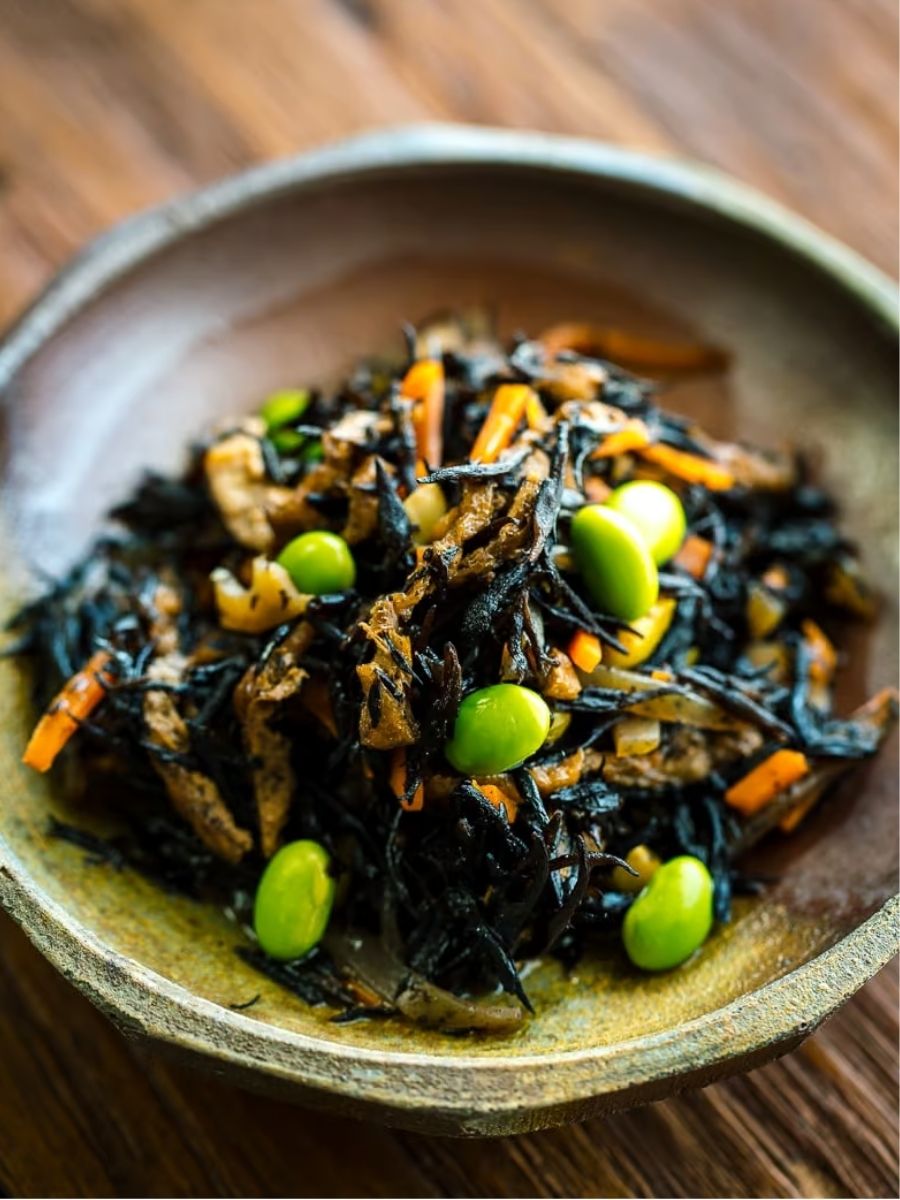
Hijiki Seaweed Salad is a classic Japanese side dish featuring rehydrated seaweed, fried tofu, carrots, and edamame simmered in a sweet-savory broth made with dashi, mirin, sugar, and soy sauce. Lotus root and konnyaku are optional additions that provide extra texture. Serve it alongside a Japanese meal or pack it into a bento lunch box. This make-ahead dish can be refrigerated for several days or frozen in individual portions for convenient meal planning.
Prep Time 15 minutes
Cook Time 45 minutes
Total Time 1 hour
Servings: 4
Course: Side Dish
Cuisine: Japanese

Ingredients
  

For the Hijiki Salad
  • - ½ cup dried hijiki seaweed 1 oz; mehijiki, the small, soft buds, or nagahijiki, the longer, chewier stems
  • - 4 cups water for soaking the seaweed
  • - 2 aburaage deep-fried tofu pouches; 1.4 oz or 40 g
  • - 3 oz konnyaku konjac, about one-third of a block (optional)
  • - 3 oz carrot ½–1 carrot
  • - ¼ lotus root renkon, about 1.3 oz or 37 g, pre-boiled (optional)
  • - 1 Tbsp neutral oil
  • - 2 cups dashi Japanese soup stock; use awase dashi, dashi made from a packet or powder, or vegan shiitake-kombu dashi
  • - ⅓ cup shelled edamame 2 oz or 60 g, cooked (optional)
For the Seasonings
  • - ¼ cup mirin
  • - 2 Tbsp sugar; reduce to 1 Tbsp if you prefer a less-sweet salad
  • - ¼ cup soy sauce

Equipment

  • Measuring cups and spoons
  • Medium pot with a lid
  • Small saucepan
  • Small pot for preparing konnyaku
  • Large fine-mesh sieve
  • Cutting board
  • sharp knife
  • Wooden spoon or heat-resistant spatula
  • Colander or sink for draining and rinsing

Method
 

  1. Soak the Hijiki Seaweed: Place the dried hijiki in a bowl and cover it with 4 cups of water.
    Soak mehijiki for 10 minutes or nagahijiki for 30 minutes, depending on the variety, while preparing the other ingredients.
  2. Drain and Rinse the Seaweed: Transfer the rehydrated hijiki to a large fine-mesh sieve.
    Drain thoroughly and rinse under running water.
  3. Blanch the Fried Tofu: Bring water to a boil in a small saucepan and pour it over the aburaage to remove excess oil.
    Squeeze out the liquid, cut each tofu pouch in half lengthwise, then slice it thinly crosswise.
  4. Boil the Konnyaku: Place the konnyaku in a small pot with water and bring it to a boil.
    Cook for 3 minutes to help remove its odor and improve its ability to absorb the seasoning.
    Drain, then cut it into small strips similar in size to the tofu slices.
  5. Prepare the Carrot: Peel the carrot if needed, then cut it into thin julienne strips.
  6. Slice the Lotus Root: If using pre-boiled lotus root, cut it into thin quarter-round pieces.
  7. Heat the Oil: Pour 1 Tbsp neutral oil into a medium pot and warm it over medium heat.
  8. Cook the Vegetables: Add the carrot and lotus root to the pot.
    Stir until the vegetables are evenly coated with oil.
  9. Add the Hijiki and Tofu: Add the drained hijiki, prepared konnyaku, and sliced aburaage to the pot.
    Stir gently to distribute the ingredients evenly.
  10. Pour in the Dashi: Add 2 cups of dashi to the pot and bring the liquid to a boil.
  11. Season the Salad: Stir in ¼ cup mirin, 2 Tbsp sugar, and ¼ cup soy sauce until the sugar is incorporated into the broth.
  12. Simmer Until Tender: Cover the pot and reduce the heat to medium-low.
    Simmer for 20–30 minutes, allowing the hijiki, tofu, and vegetables to absorb the savory-sweet seasoning.
  13. Add the Edamame: Stir in ⅓ cup cooked, shelled edamame and mix until evenly distributed throughout the salad.
  14. Reduce the Remaining Sauce: Remove the lid and continue cooking until the liquid has reduced and you can see the bottom of the pot when the ingredients are moved aside.
  15. Serve the Salad: Serve the hijiki salad as a side dish with a Japanese meal or portion it into a bento lunch box.
    For meal prep, divide it into individual servings in freezer-safe silicone cups if desired.
  16. Store the Leftovers: Allow the salad to cool, then transfer it to an airtight container and refrigerate for 3–4 days.
    Alternatively, freeze individual portions for up to 1 month.
Notes

  • Choose the right hijiki: Mehijiki consists of small, soft buds and needs about 10 minutes of soaking, while nagahijiki has longer, chewier stems and requires about 30 minutes.
  • Rinse thoroughly: Drain the rehydrated seaweed and rinse it under running water before cooking.
  • Prepare the tofu properly: Pour boiling water over the aburaage and squeeze out the excess liquid to remove excess oil before slicing.
  • Customize the vegetables: Konnyaku, lotus root, and edamame are optional, so you can adjust the combination according to your preference and availability.
  • Adjust the sweetness: The salad traditionally has a sweet-savory flavor. Reduce the sugar from 2 tablespoons to 1 tablespoon if you prefer a less-sweet result.
  • Choose your dashi carefully: For a vegan version, use shiitake-kombu dashi instead of a stock containing fish.
  • Reduce the broth sufficiently: Uncover the pot near the end of cooking and continue simmering until most of the liquid has evaporated and the bottom of the pot becomes visible when you move the ingredients.
  • Make ahead: Refrigerate the finished salad in an airtight container for 3–4 days or freeze it in individual portions for up to one month.