Prepare the Butter and Milk: Melt the butter in a small saucepan over low heat. Remove the pan from the heat and add the cold milk.Allow the mixture to become lukewarm before using it. Prepare the Yeast if Needed: If using fast-action dried yeast, add it directly to the flour.If using active dry yeast instead, stir it into the lukewarm milk mixture along with the sugar and let it stand for 5 to 10 minutes, until it becomes foamy. Combine the Dry Ingredients: Add the flour and salt to the bowl of a stand mixer fitted with the dough hook. Mix briefly to combine. Add the fast-action dried yeast at this stage if using it. Mix the Dough: Pour the lukewarm milk and butter mixture into the flour mixture. Begin mixing on low speed until the ingredients start coming together.
Knead the Dough: Increase the mixer speed to medium and knead for 8 to 10 minutes. The finished dough should be smooth and slightly tacky but not sticky. Let the Dough Rise: Remove the dough from the mixer bowl and shape it into a ball. Lightly grease the bowl, return the dough to it, and cover with a clean kitchen towel or plastic wrap. Leave in a warm place for about 1 to 1½ hours, or until doubled in size. Deflate and Divide the Dough: Gently punch down the risen dough. Transfer it to a lightly floured work surface and divide it into three equal pieces. Shape the Dough Ropes: Roll each piece into a long rope measuring approximately 24 to 28 inches (60 to 70 cm). Try to keep the ropes similar in length and thickness for an even braid. Braid the Loaf: Pinch the three ropes together at one end and braid them loosely. Tuck the ends underneath the loaf to create a neat shape. Second Rise: Place the braided loaf on a baking sheet lined with parchment paper.Cover lightly with a cloth and leave it to rest for 30 to 45 minutes, until slightly puffed. Preheat the Oven: Preheat the oven to 356°F (180°C) while the shaped loaf finishes its second rise.
Apply the Egg Yolk: Beat the egg yolk and gently brush it over the surface of the braided dough.
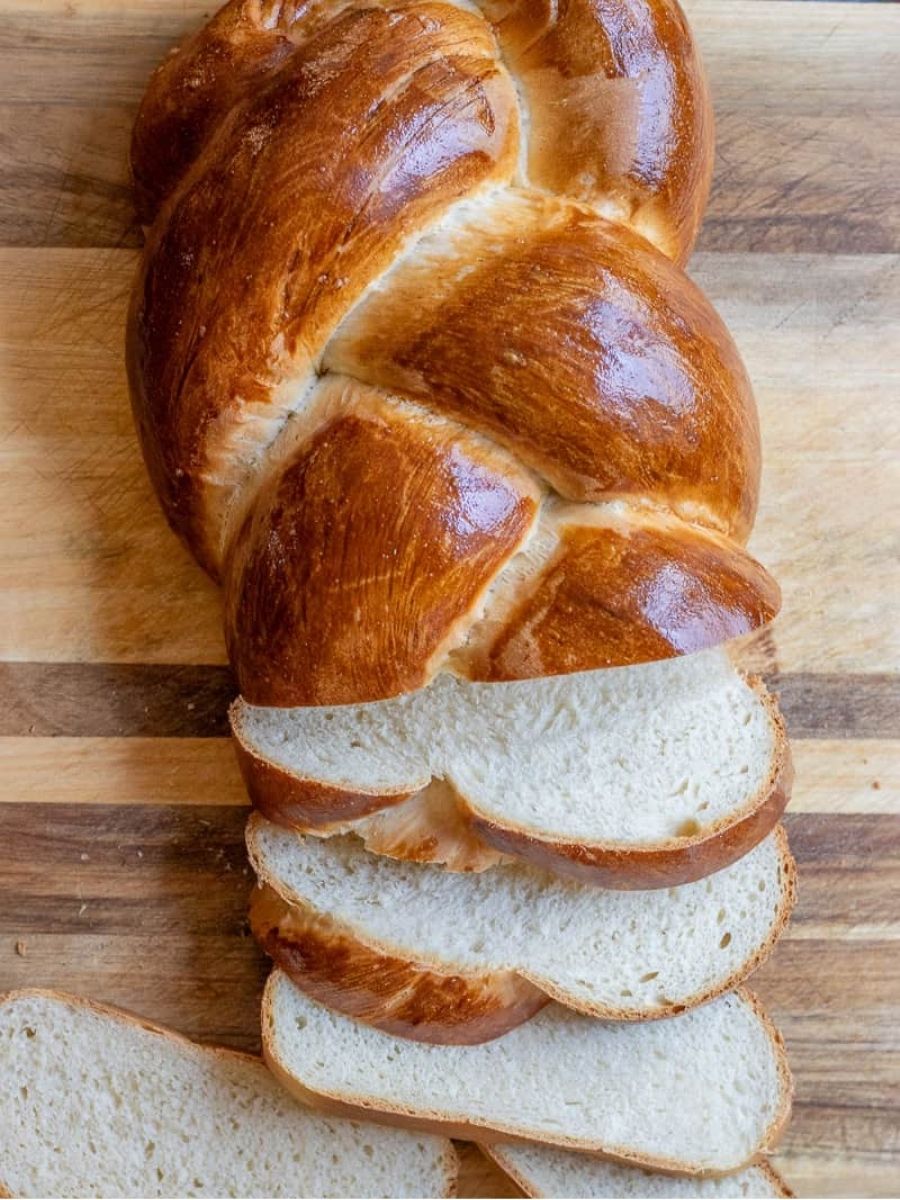
Bake the Bread: Bake for 30 to 35 minutes, until the loaf is golden brown and sounds hollow when tapped on the bottom. If the top begins browning too quickly, loosely tent it with aluminum foil during the final 10 minutes of baking. Cool Before Slicing: Transfer the baked bread to a wire rack and allow it to cool completely before slicing so the crumb can set properly.