Go Back
Donna R. Luis

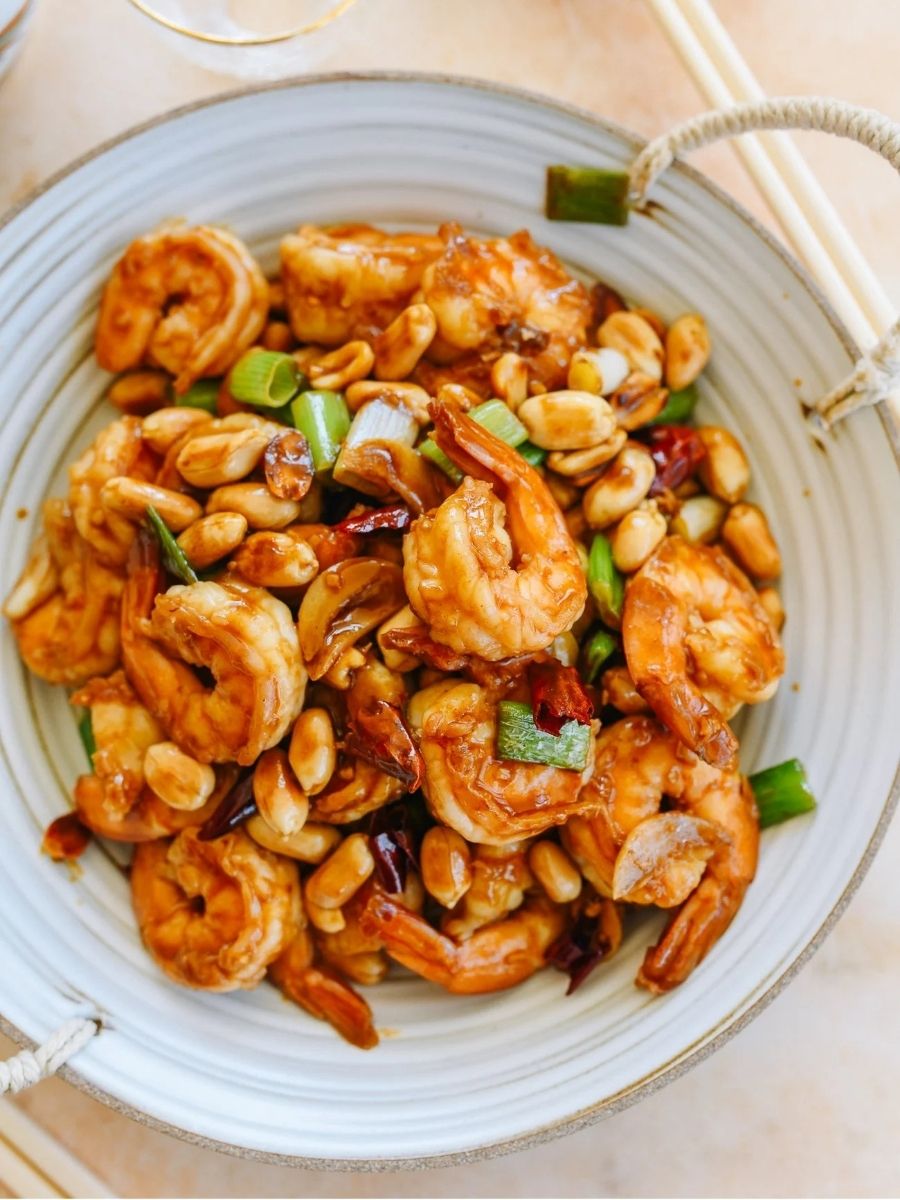
Sweet Spicy Kung Pao Shrimp

A quick and flavorful Kung Pao Shrimp featuring tender seared shrimp, crunchy peanuts, fragrant garlic and ginger, spicy dried chilies, and scallions in a glossy sweet, savory, tangy Sichuan-inspired sauce.
Prep Time 35 minutes
Cook Time 10 minutes
Total Time 45 minutes
Servings: 4
Course: Main Course
Cuisine: Chinese

Ingredients
  

For Roasting the Peanuts
  • 1 teaspoon neutral oil
  • 1 cup raw peanuts shelled, with or without the skin
For the Shrimp
  • 1 pound large shrimp peeled and deveined
  • 1 teaspoon neutral oil
  • 1 teaspoon Shaoxing wine
  • 1/4 teaspoon salt
  • 1/8 teaspoon white pepper powder
  • 1/2 teaspoon cornstarch
For the Sauce
  • 3 tablespoons water
  • 1 tablespoon rice wine vinegar
  • 1 tablespoon light soy sauce
  • 1 teaspoon sugar
  • 1 teaspoon cornstarch
  • 1/2 teaspoon Sichuan peppercorn powder
  • 1/2 teaspoon dark soy sauce
For the Stir-Fry
  • 3 tablespoons neutral oil divided
  • 3 cloves garlic smashed and sliced
  • 1 tablespoon ginger minced
  • 2 –4 dried red chilies deseeded and chopped, adjusted to taste
  • 6 scallions white parts only, cut into 1/2-inch (1 cm) pieces

Equipment

  • Wok
  • Medium mixing bowl
  • Small or medium bowl for the sauce
  • Bowl for marinating the shrimp
  • Cutting board
  • Knife
  • Measuring cups and spoons
  • Spatula or wok turner

Method
 

  1. Roast the Peanuts: Heat 1 teaspoon of neutral oil in a wok over medium heat. Add the raw peanuts and stir constantly for 4–5 minutes to prevent burning. Turn off the heat and continue stirring for 1 minute, allowing the residual heat of the wok to finish roasting them. Transfer the peanuts aside to cool completely; they will become crunchy as they cool. Alternatively, use already roasted, shelled, unsalted peanuts.
  2. Prepare the Shrimp: Butterfly each shrimp by making a shallow cut along the back without slicing all the way through. Place the shrimp in a bowl and add 1 teaspoon neutral oil, Shaoxing wine, salt, and white pepper powder. Mix and let the shrimp stand for 15 minutes. Stir in the 1/2 teaspoon cornstarch immediately before cooking.
  3. Mix the Sauce: In a medium bowl, combine the water, rice wine vinegar, light soy sauce, sugar, cornstarch, Sichuan peppercorn powder, and dark soy sauce. Mix until the ingredients are well combined and set aside.
  4. Heat the Wok: Heat the wok over high heat until it just begins to smoke. Add 2 tablespoons of the neutral oil.
  5. Sear the Shrimp: Add the prepared shrimp to the hot wok and quickly sear them on both sides. Once the shrimp turn light pink, transfer them to a bowl and set aside.
  6. Cook the Aromatics: Reduce the heat to low and add the remaining 1 tablespoon of neutral oil. Add the sliced garlic, minced ginger, chopped dried chilies, and scallion pieces. Cook for 1–2 minutes over low heat, stirring until fragrant.
  7. Return the Shrimp: Increase the heat to high and return the seared shrimp to the wok. Stir-fry for about 30 seconds.
  8. Add the Sauce: Stir the prepared sauce again to redistribute the cornstarch that may have settled at the bottom. Pour the sauce into the wok and stir-fry for about 1 minute, until it thickens quickly and coats the ingredients.
  9. Finish with the Peanuts: Add the roasted peanuts and turn off the heat. Toss everything together thoroughly until well combined, then serve immediately.
Notes

  • Use large shrimp that are peeled and deveined for the best match to the original recipe.
  • Butterfly the shrimp carefully without cutting all the way through to help them cook quickly and evenly.
  • Stir the peanuts constantly while roasting, as they can burn easily.
  • Allow freshly roasted peanuts to cool completely before using, as they become crunchy during cooling.
  • Adjust the number of dried red chilies according to your preferred spice level.
  • Keep the heat low when cooking the garlic, ginger, chilies, and scallions to prevent the aromatics from burning.
  • Stir the sauce again immediately before adding it to the wok because the cornstarch naturally settles at the bottom.
  • The sauce thickens very quickly once added to the hot wok, so keep the ingredients moving.
  • Serve the dish promptly after adding the peanuts to enjoy their best crunchy texture.