Make the Dough: Add the active sourdough starter, warm water, and olive oil to a large bowl. Stir together with a fork, then add the bread flour and fine sea salt. Continue mixing until the dough becomes stiff, then use your hands to squish and combine the mixture until all of the flour is incorporated. The dough should look rough and shaggy. Rest the Dough: Cover the bowl with plastic wrap, reusable wrap, or a very damp kitchen towel. Let the dough rest for 30 minutes to 1 hour.
Form a Rough Ball: After the resting period, work the dough briefly with your hands and shape it into a rough ball. This should take about 15 seconds.
Begin the Bulk Rise: Cover the bowl with lightly oiled plastic wrap, or transfer the dough to a high-sided dough tub. Place it somewhere warm, ideally around 70–75°F. Allow the dough to rise until it no longer looks dense and has almost doubled in size. The exact fermentation time varies with temperature: it may take about 2–4 hours at 80°F/26°C or approximately 10–12 hours at 68°F/20°C. Watch the dough rather than relying strictly on the clock. Stretch and Fold the Dough (Optional): About 30–45 minutes into the bulk fermentation, lift a portion of the dough and stretch it upward, then fold it over itself. Rotate the bowl one-quarter turn and repeat until you have worked around the entire bowl; this counts as one set. Complete 1–2 additional sets, spacing them about 1 hour apart. If the dough resists stretching, allow it to rest longer between sets. Dough made with 250 g water will feel stiffer, while dough made with 300–325 g water will be more stretchy and elastic. Shape the Dough: Transfer the dough to a lightly floured work surface. Starting at the top, fold the dough toward the center. Turn it slightly and fold the next section toward the center. Continue around the dough until you have completed a full circle. Flip the dough so the seam is underneath, then gently cup the sides and rotate the dough in a circular motion to tighten its shape and create surface tension. Avoid using too much flour, as this can cause the dough to slide instead of tightening. Prepare for the Second Rise: If using 250 g water, place the shaped dough into a Dutch oven lined with parchment paper or coated with fine-ground cornmeal. Cover and let it rise for about 30 minutes to 1 hour. The dough should look slightly puffy but should not double in size. If the dough contains more than 250 g water, use a floured, cloth-lined proofing basket instead of a free-form rise in the Dutch oven because the softer dough may spread. Preheat the Oven: Preheat the oven to 450°F/232°C while the dough completes its second rise.
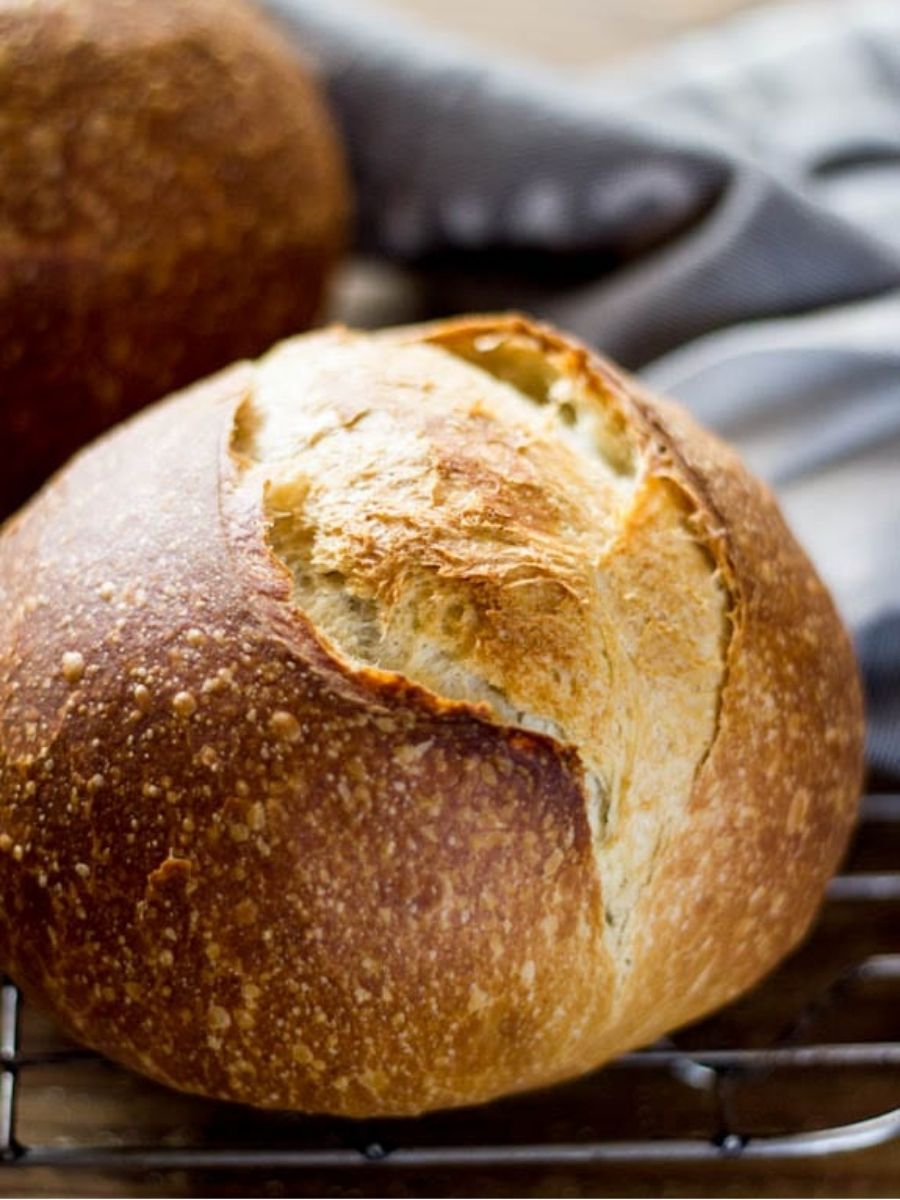
Score the Dough: Immediately before baking, make a shallow 2–3-inch slash, or a longer cut if preferred, across the center of the dough using a bread lame, razor blade, or small sharp knife. Make the cut approximately ¼ inch deep.
Bake the Bread Covered: Place the Dutch oven on the center rack with the lid on. Reduce the oven temperature to 400°F/204°C and bake for 20 minutes.
Finish Baking Uncovered: Remove the Dutch oven lid and continue baking the bread uncovered for another 40 minutes, or until the crust is a deep golden brown. Since ovens vary, make only minimal temperature adjustments if needed.
Check for Doneness: Use a digital thermometer to check the center of the bread. The sourdough is done when the internal temperature reaches approximately 205–210°F/96–98°C.
Cool Before Slicing: Carefully remove the finished bread from the hot Dutch oven and place it on a wire rack. Allow it to cool for at least 1 hour before slicing.