
Ingredients
Equipment
Method
The Night Before
- Dissolve the Yeast: Warm the milk, then dissolve the fresh baker’s yeast in it.
- Begin the Dough: Pour the milk-and-yeast mixture into the bowl of a stand mixer.
- Add the Main Ingredients: Add the beaten eggs, flour, and sugar to the mixer bowl.
- Knead the Dough: Knead on low speed for 2 to 3 minutes, then increase the speed and continue kneading for another 7 to 8 minutes.
- Incorporate the Salt and Butter: Add the fine salt and diced butter, then knead for another 10 minutes until the ingredients are thoroughly incorporated.
- First Rise: Transfer the dough to a bowl, cover it with a cloth, and leave it in a warm place for 1.5 to 2 hours, or until the dough has doubled in volume.
- Deflate the Dough: Gently deflate the risen dough on a lightly floured work surface.
- Refrigerate Overnight: Return the dough to the bowl, cover it tightly with cling film, and refrigerate it overnight.
D-Day
- Bring the Dough to Room Temperature: Remove the dough from the refrigerator and let it rest at room temperature for 30 minutes.
- Prepare the Dough for Rolling: Place the dough on a Silpat mat or in a sponge cake tin such as a Flexipat.
- Cover Before Shaping: Place a sheet of parchment paper or a second Silpat mat over the dough.
- Shape the Fougasse: Roll out the dough through the covering sheet, or flatten it using the palm of your hand, forming a rectangle approximately the size of the mold or baking tray.
- Final Rise: Remove the top parchment paper or Silpat mat and let the shaped dough rise in a temperate, draft-free place for about 1 hour.
- Preheat the Oven: Preheat the oven to 180°C.
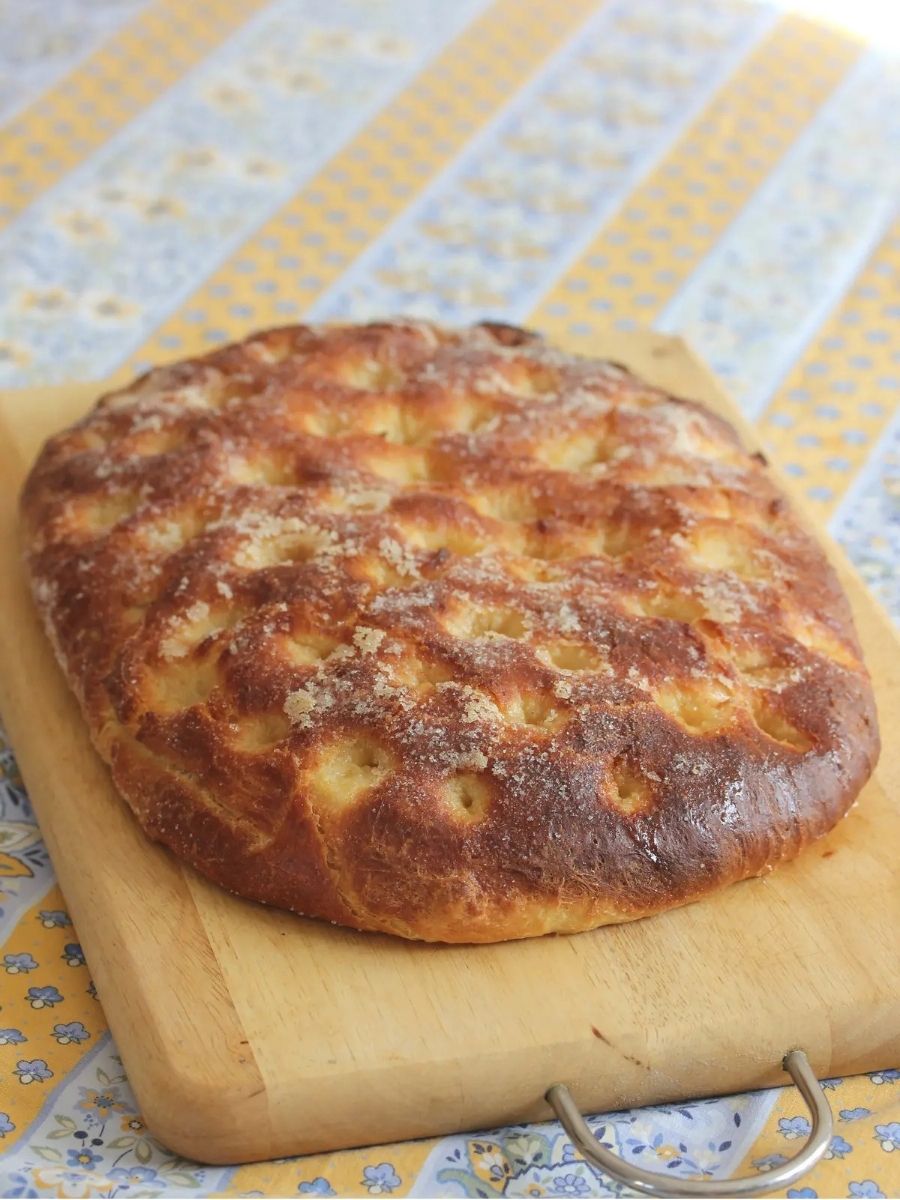
- Create the Indentations: Press your thumb or the handle of a wooden spoon into the surface at regular intervals to create small indentations across the fougasse.
- Fill the Indentations: Place a drop of orange blossom water, a small cube of butter, and a little sugar into each indentation.
- Finish the Surface: Sprinkle the remaining sugar evenly over the entire surface of the dough.
- Bake the Fougasse: Place the prepared fougasse in the hot oven and bake for approximately 20 minutes, until baked and golden.
- Add the Final Orange Blossom Finish: As soon as the fougasse comes out of the oven, spray orange blossom water over the still-warm surface.
- Cool and Serve: Allow the fougasse to cool before cutting it into squares and serving.
Notes
- The dough requires an overnight refrigeration period, so begin the recipe the evening before you plan to bake it.
- The first rise is complete when the dough has doubled in volume.
- Covering the dough with parchment paper or a second Silpat mat makes it easier to roll without sticking to the rolling pin.
- Let the shaped dough rise in a draft-free, temperate place before adding the finishing ingredients.
- Press the indentations at regular intervals so the orange blossom water, butter, and sugar are distributed across the surface.
- The fougasse should be finished with orange blossom water immediately after baking while it is still warm.
- Allow the fougasse to cool before cutting it into squares.