
CookLibrary is a recipe curation and editorial platform. We research and curate recipes from public sources, considering ratings, reviews, comments, and feedback. We then refine and present them clearly for home cooks. We are committed to an ad-free, focused experience that makes discovering and preparing recipes easier.
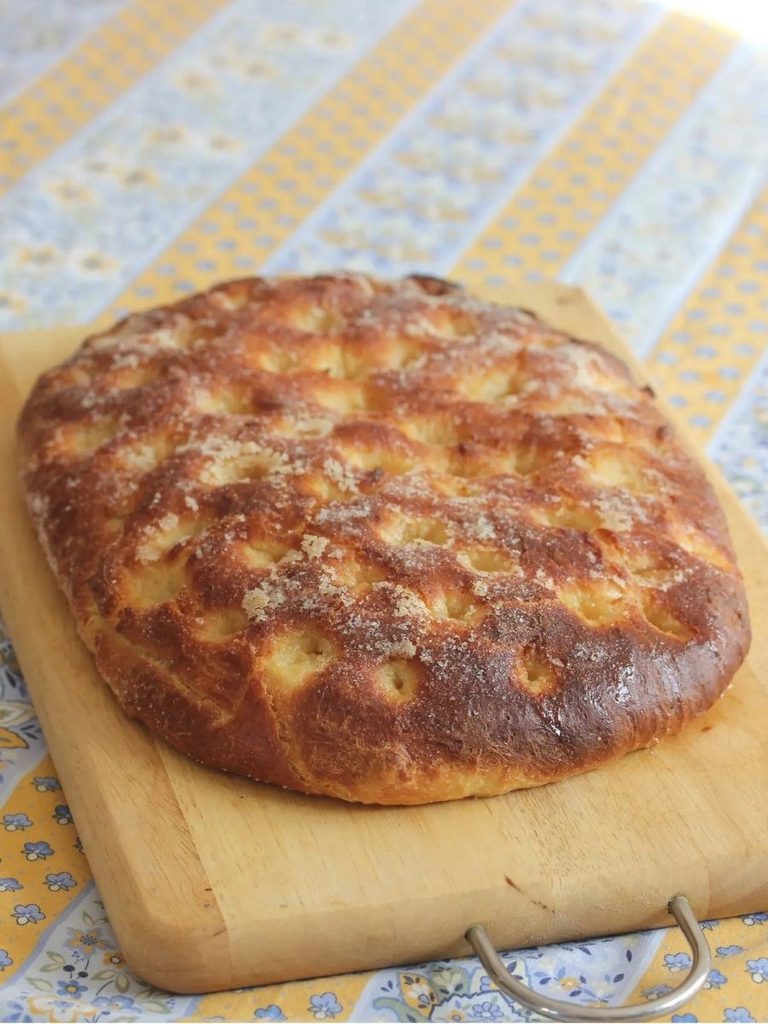
This sweet fougasse is a beautiful Provençal-style bakery treat with a soft, tender crumb, a lightly golden surface, and a wonderfully fragrant finish.
Made from a rich yeast dough, it combines the comforting flavors of milk, eggs, butter, flour, and sugar into a pastry-like bread that feels both rustic and indulgent.
The long overnight resting period gives the dough time to develop its texture before it is shaped, finished, and baked the following day.
Orange blossom water is the defining flavor in this recipe, adding a delicate floral aroma that makes the finished fougasse especially distinctive.
Small indentations are pressed across the surface of the dough before baking, creating little pockets for orange blossom water, butter, and sugar.
As the fougasse bakes, these additions create sweet, buttery spots across the surface while the remaining sugar adds a lightly caramelized touch.
The dough begins with fresh baker’s yeast dissolved in warm milk, followed by beaten eggs, flour, and sugar. Butter and fine salt are incorporated during kneading to create a smooth, enriched dough.
After its first rise, the dough is gently deflated and refrigerated overnight, making this an excellent recipe to prepare ahead.
Once rested, the dough is brought back to room temperature, shaped into a rectangle, allowed to rise again, then finished with its fragrant toppings.
Baked at 180°C for approximately 20 minutes, the fougasse emerges warm and golden.
A final spray of orange blossom water while it is still warm intensifies its signature aroma.
Once cooled, it can be cut into squares and enjoyed as a special breakfast, snack, or sweet bakery treat.
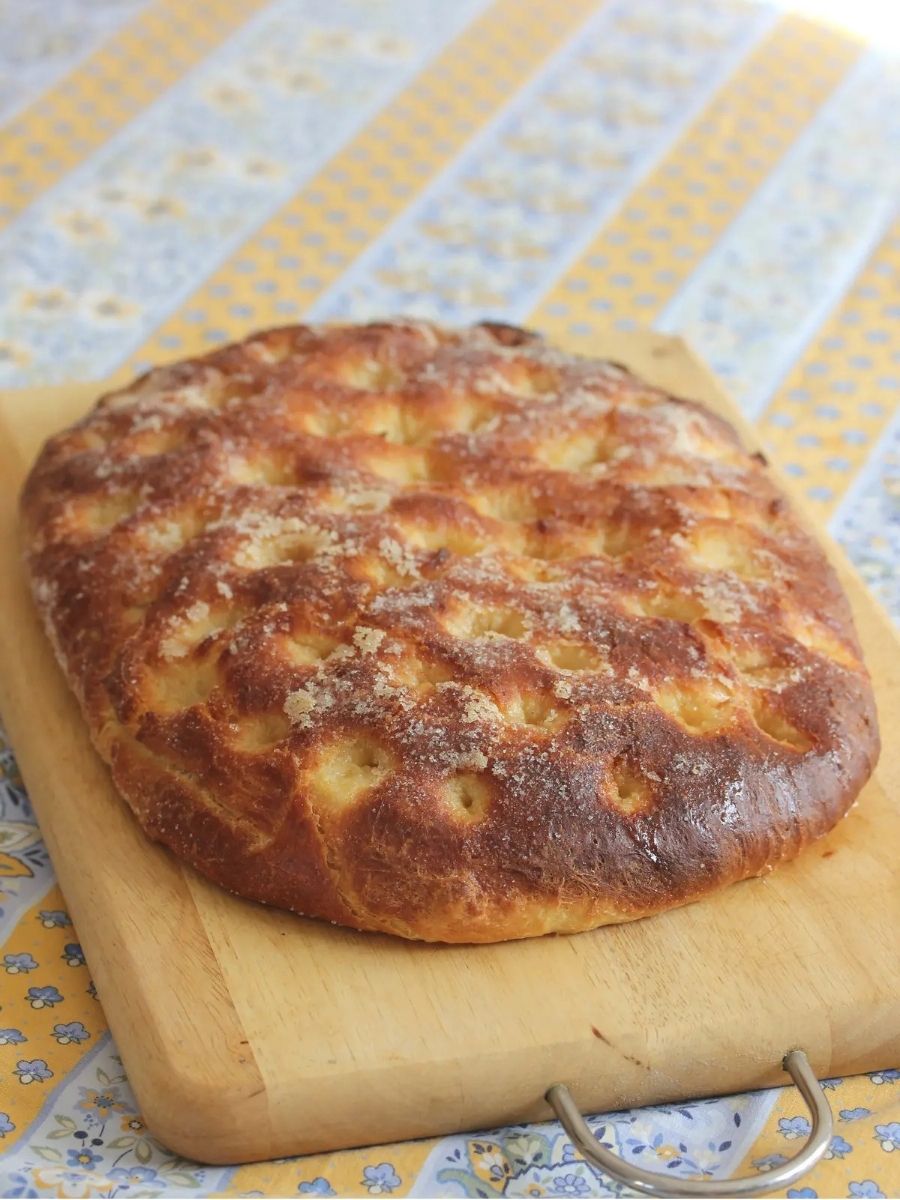

French Sweet Fougasse
Ingredients
Equipment
Method
- Dissolve the Yeast: Warm the milk, then dissolve the fresh baker’s yeast in it.
- Begin the Dough: Pour the milk-and-yeast mixture into the bowl of a stand mixer.
- Add the Main Ingredients: Add the beaten eggs, flour, and sugar to the mixer bowl.
- Knead the Dough: Knead on low speed for 2 to 3 minutes, then increase the speed and continue kneading for another 7 to 8 minutes.
- Incorporate the Salt and Butter: Add the fine salt and diced butter, then knead for another 10 minutes until the ingredients are thoroughly incorporated.
- First Rise: Transfer the dough to a bowl, cover it with a cloth, and leave it in a warm place for 1.5 to 2 hours, or until the dough has doubled in volume.
- Deflate the Dough: Gently deflate the risen dough on a lightly floured work surface.
- Refrigerate Overnight: Return the dough to the bowl, cover it tightly with cling film, and refrigerate it overnight.
- Bring the Dough to Room Temperature: Remove the dough from the refrigerator and let it rest at room temperature for 30 minutes.
- Prepare the Dough for Rolling: Place the dough on a Silpat mat or in a sponge cake tin such as a Flexipat.
- Cover Before Shaping: Place a sheet of parchment paper or a second Silpat mat over the dough.
- Shape the Fougasse: Roll out the dough through the covering sheet, or flatten it using the palm of your hand, forming a rectangle approximately the size of the mold or baking tray.
- Final Rise: Remove the top parchment paper or Silpat mat and let the shaped dough rise in a temperate, draft-free place for about 1 hour.
- Preheat the Oven: Preheat the oven to 180°C.
- Create the Indentations: Press your thumb or the handle of a wooden spoon into the surface at regular intervals to create small indentations across the fougasse.
- Fill the Indentations: Place a drop of orange blossom water, a small cube of butter, and a little sugar into each indentation.
- Finish the Surface: Sprinkle the remaining sugar evenly over the entire surface of the dough.
- Bake the Fougasse: Place the prepared fougasse in the hot oven and bake for approximately 20 minutes, until baked and golden.
- Add the Final Orange Blossom Finish: As soon as the fougasse comes out of the oven, spray orange blossom water over the still-warm surface.
- Cool and Serve: Allow the fougasse to cool before cutting it into squares and serving.
Notes
- The dough requires an overnight refrigeration period, so begin the recipe the evening before you plan to bake it.
- The first rise is complete when the dough has doubled in volume.
- Covering the dough with parchment paper or a second Silpat mat makes it easier to roll without sticking to the rolling pin.
- Let the shaped dough rise in a draft-free, temperate place before adding the finishing ingredients.
- Press the indentations at regular intervals so the orange blossom water, butter, and sugar are distributed across the surface.
- The fougasse should be finished with orange blossom water immediately after baking while it is still warm.
- Allow the fougasse to cool before cutting it into squares.
Chef’s Secret
The most important detail for achieving the characteristic texture of this sweet fougasse is giving the enriched dough enough time to develop through its two-stage rising process.
After the initial rise, gently deflate the dough rather than aggressively working it, then refrigerate it overnight as directed.
The following day, allow the dough to rest for 30 minutes before shaping so it is easier to handle.
When making the surface indentations, press them firmly enough to create distinct pockets without tearing the dough.
Fill those pockets with the orange blossom water, butter, and sugar so the flavors become concentrated in small areas across the fougasse.
Finally, apply the last orange blossom water while the bread is still warm, which helps preserve its fragrant character.
Serving Suggestions
Cut the cooled fougasse into squares and serve it as a sweet breakfast bread, afternoon treat, or bakery-style snack.
Its floral orange blossom flavor pairs naturally with a cup of coffee or tea.
For a simple presentation, serve the squares as they are so the golden surface, sugar, and buttery indentations remain the focus.
It can also be included on a breakfast or brunch table alongside other pastries and fresh fruit.
Conclusion
This sweet fougasse brings together a soft enriched dough, fragrant orange blossom water, butter, and sugar in a distinctly Provençal-style treat.
The overnight rise develops the dough while making the recipe convenient to prepare ahead.
Its golden surface and sweet, aromatic finish make every square inviting.
Serve it cooled for a delightful breakfast, snack, or afternoon bakery treat.
