
CookLibrary is a recipe curation and editorial platform. We research and curate recipes from public sources, considering ratings, reviews, comments, and feedback. We then refine and present them clearly for home cooks. We are committed to an ad-free, focused experience that makes discovering and preparing recipes easier.
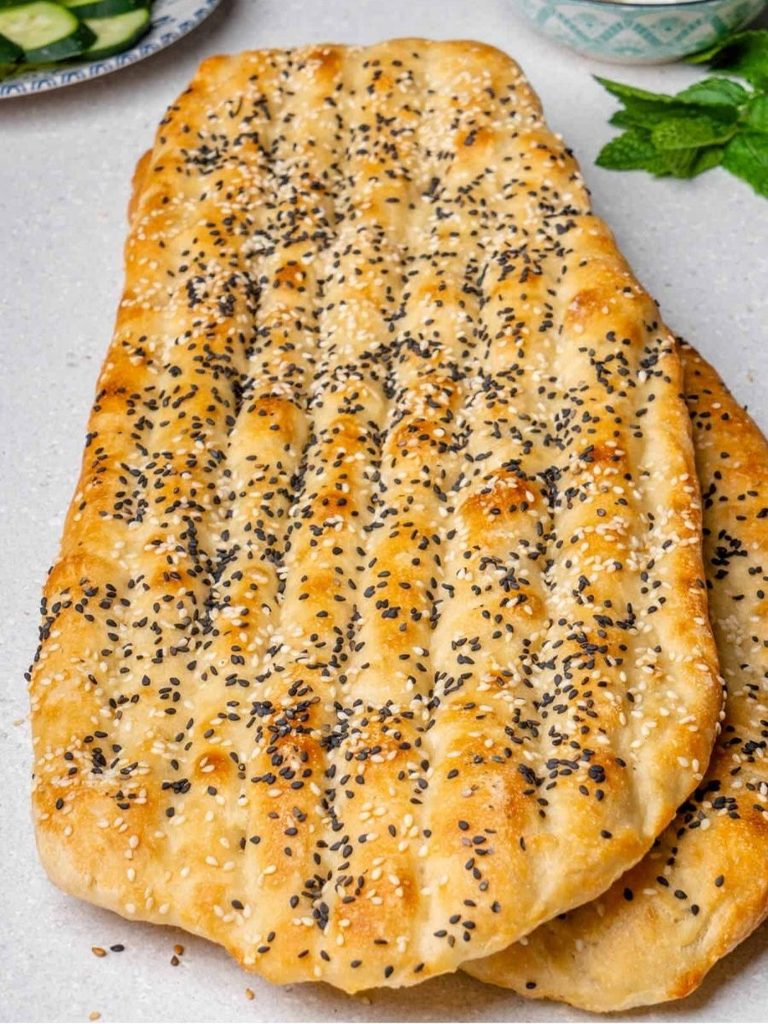
Barbari Bread is a wonderfully rustic Persian flatbread known for its striking shape, lightly crisp exterior, and wonderfully soft, chewy center.
Made with simple pantry staples, this homemade bread delivers an inviting combination of texture and flavor that makes it especially satisfying fresh from the oven.
The dough begins with all-purpose flour, lukewarm water, instant yeast, salt, sugar, and olive oil.
After kneading, the sticky dough becomes elastic and airy before going through two rising stages that help create its characteristic texture.
Once divided into two loaves, the dough is stretched into long, flat ovals and finished with a thin flour-based glaze.
The glaze is an important part of the bread’s appearance and texture, helping the surface turn beautifully golden as it bakes.
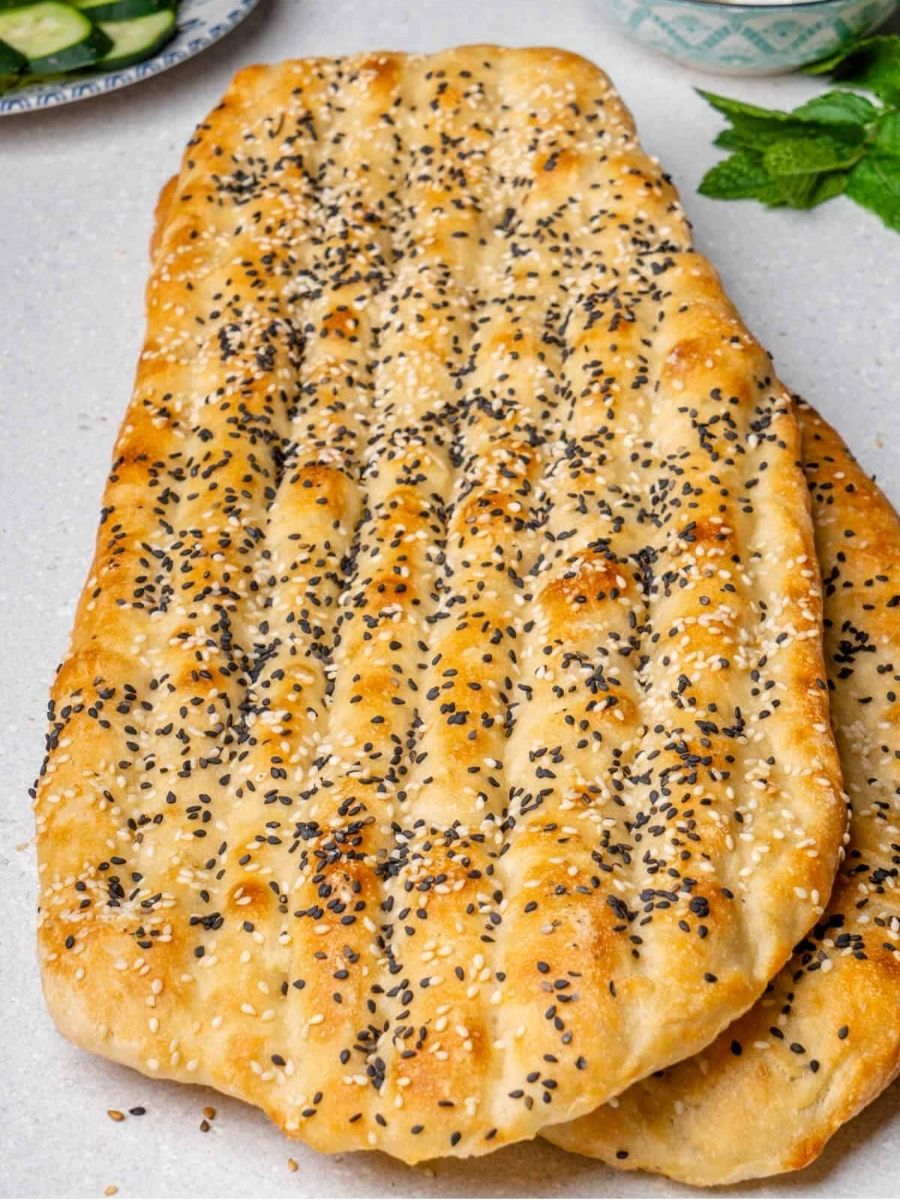
Finger-pressed ridges run lengthwise across each loaf, creating the signature Barbari pattern while also giving the bread plenty of character.
A generous sprinkling of white sesame seeds and nigella seeds or black sesame seeds adds a subtle nutty, aromatic finish.
Baked at 200°C (400°F), the loaves emerge lightly golden with a satisfying crust surrounding a tender, substantial interior.
Barbari Bread is especially appealing for breakfast or as an appetizer, and its generous shape makes it easy to tear, slice, or serve alongside favorite toppings.
With its straightforward ingredients and impressive bakery-style appearance, it is a rewarding bread to make at home.

Classic Persian Barbari Bread
Ingredients
Equipment
Method
- Combine the Dry Ingredients: In a large mixing bowl, stir together the all-purpose flour, instant yeast, sugar, and salt until evenly combined.
- Form the Dough: Slowly pour in the lukewarm water while continuously mixing with a wooden spoon until the ingredients come together into a dough.
- Add the Olive Oil: Add the olive oil to the dough and continue working it with the wooden spoon directly in the mixing bowl.
- Knead Until Elastic: Knead the dough for 5–8 minutes. It will be quite sticky, but continue working it until it becomes elastic.
- First Rise: Cover the bowl tightly with cling wrap and leave the dough to rise for 1 hour, or until it has doubled in size.
- Divide and Shape: Transfer the risen dough to a lightly floured work surface and divide it into 2 equal pieces.Lightly flour each piece, then fold the edges underneath and shape each portion into an oval loaf.
- Second Rise: Cover the two shaped dough portions with a clean kitchen towel and allow them to rise for another 1 hour.
- Preheat the Oven: During the second rise, preheat the oven to 200°C / 400°F.
- Prepare the Glaze: Combine 1 tablespoon all-purpose flour, ⅓ cup water, and ½ teaspoon sugar in a small saucepan.Cook over low heat, whisking for a few minutes until the mixture thickens into a glaze consistency. Remove from the heat and allow it to cool.
- Prepare the Baking Sheet: Place a sheet of parchment paper on a baking sheet.
- Stretch the First Loaf: Transfer one piece of dough onto the parchment paper. Using your hands, gently stretch it lengthwise and diagonally toward two corners of the parchment.Continue stretching around the edges until you have an evenly shaped, flat oval. The source loaf was approximately 39 cm long diagonally.
- Apply the Glaze: Brush a thin, even layer of the cooled glaze over the surface of the stretched dough.
- Create the Signature Ridges: Use your fingertips to press lengthwise indentations across the dough, spacing the ridges approximately 1 inch apart.
- Add the Seeds: Sprinkle the surface evenly with the white sesame seeds and nigella seeds or black sesame seeds.
- Bake the First Loaf: Bake at 200°C / 400°F for 20 minutes, or until the bread is lightly golden.
- Prepare the Second Loaf: While the first loaf is baking, repeat the stretching, glazing, ridging, and seed-topping process with the second piece of dough.
- Serve: Serve the freshly baked Barbari Bread as a Persian breakfast or with your favorite toppings.
Notes
- The dough is naturally quite sticky, so avoid adding excessive flour while kneading or shaping.
- Knead for the full 5–8 minutes so the dough develops an elastic texture before its first rise.
- Allow the dough to double in size during the first 1-hour rise for the intended airy texture.
- Divide the dough into two equal portions to create two loaves.
- Stretch each loaf evenly so the finished flatbread has a consistent thickness.
- The characteristic fingertip indentations should run lengthwise and be approximately 1 inch apart.
- Let the prepared glaze cool before brushing it over the dough.
- Bake at 200°C / 400°F until the surface is lightly golden.
- Nigella seeds can be replaced with black sesame seeds as specified in the original recipe.
Chef’s Secret
The key to getting Barbari Bread’s characteristic texture is resisting the temptation to heavily flour the sticky dough.
During the initial kneading, work the mixture patiently with the wooden spoon for the full 5–8 minutes until it becomes noticeably elastic.
When shaping, use only a light dusting of flour on the work surface and your hands so the dough remains soft and supple.
The second rise is equally important: give the shaped loaves the full hour specified in the recipe so they have time to become lighter before stretching.
When transferring the dough to parchment, stretch it gently and evenly rather than pressing it aggressively, then make the lengthwise indentations with your fingertips to preserve the signature Barbari appearance.
Serving Suggestions
Serve Barbari Bread warm and fresh from the oven as a Persian-style breakfast or appetizer.
It pairs beautifully with favorite toppings and can be torn into pieces for sharing. Try serving it alongside creamy spreads, fresh vegetables, herbs, or other breakfast accompaniments.
The sesame and nigella seed topping already provides an aromatic finish, but the long oval loaves are also ideal for scooping up dips or enjoying with your preferred savory toppings.
Conclusion
Homemade Barbari Bread brings together a crisp, lightly golden surface and a soft, chewy interior in one wonderfully rustic Persian flatbread.
Its simple yeast dough, signature ridges, and sesame-and-nigella topping give it an unmistakable character.
With two rising stages and a straightforward baking process, this recipe produces two impressive loaves.
Serve them warm for breakfast, as an appetizer, or alongside your favorite toppings.
Freshly baked Barbari is a delicious way to enjoy traditional Persian-style flatbread at home.
