Go Back
Donna R. Luis

Sweet Savory Tamagoyaki

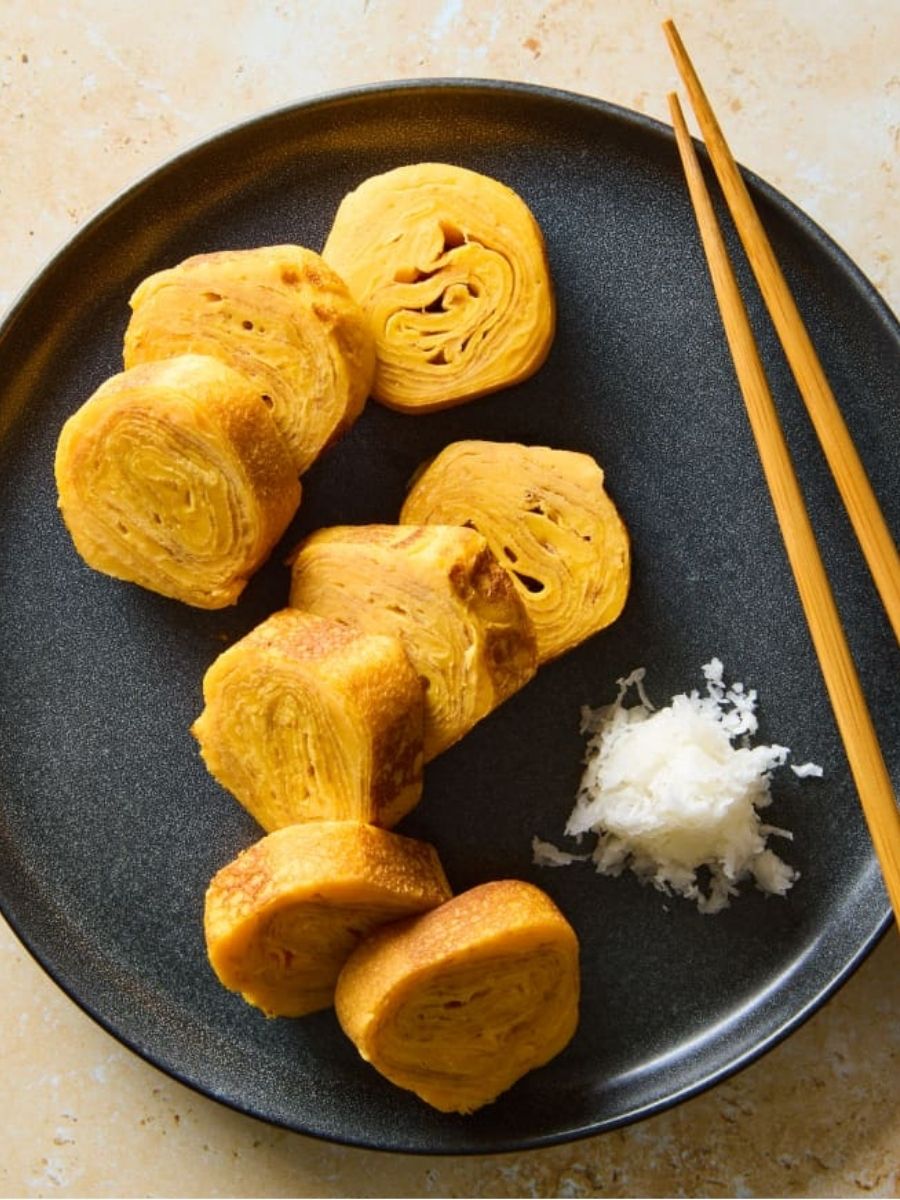
This homemade tamagoyaki combines seasoned eggs, mirin, sugar, hondashi, salt, and toasted sesame oil to create a tender Japanese rolled omelet with delicate layers and a balanced sweet-savory flavor. The egg mixture is strained for a smooth texture, cooked in several thin layers, rolled as it sets, then sliced into individual pieces. It takes about 25 minutes from preparation through cooking and serves 2.
Prep Time 5 minutes
Cook Time 20 minutes
Total Time 25 minutes
Servings: 2 people
Course: Breakfast
Cuisine: Japanese

Ingredients
  

For the Tamagoyaki
  • 6 large eggs
  • 1 tablespoon mirin
  • 1 teaspoon granulated sugar
  • 1/2 teaspoon kosher salt
  • 1/2 teaspoon hondashi powdered bonito stock or dashi base
  • 1/2 teaspoon toasted sesame oil
  • Cooking spray or 1 teaspoon neutral oil such as canola or vegetable oil

Equipment

  • Medium mixing bowl
  • Fine-mesh strainer
  • Tamagoyaki pan or medium nonstick pan
  • Chopsticks or fork
  • Two flexible spatulas for rolling
  • Measuring spoons
  • Cutting board
  • Knife

Method
 

  1. Prepare the Egg Mixture: Place the eggs, mirin, sugar, kosher salt, hondashi, and toasted sesame oil in a medium bowl.
    Whisk with chopsticks or a fork until the egg whites are fully incorporated and no streaks remain.
  2. Strain the Eggs: Pour the egg mixture through a fine-mesh strainer into another bowl, swirling the strainer occasionally.
    Continue for a few minutes if needed, then discard anything left in the strainer.
  3. Heat the Pan: Heat a tamagoyaki pan or medium nonstick pan over medium-low heat.
    Coat the surface lightly with cooking spray or 1 teaspoon neutral oil.
  4. Cook the First Layer: Pour about 3 tablespoons of egg mixture into the pan.
    Quickly tilt the pan in different directions so the eggs spread into a thin layer covering the surface.
  5. Partially Set the Egg: Cook for 3 to 4 minutes, until the egg is about 80% set but remains soft enough to roll.
  6. Roll the Omelet: Starting at the short end farthest from you, use chopsticks or two flexible spatulas to roll the egg toward you, folding it onto itself.
    Slide the rolled omelet toward the top of the pan. If using a round pan, roll from one side to the other.
  7. Add Another Layer: Pour another thin layer of egg mixture into the pan. Lift the rolled omelet slightly so the fresh egg can flow underneath it.
  8. Repeat the Layers: Continue adding, cooking, and rolling the egg until all the mixture has been used, working through approximately 5 to 6 batches.
  9. Cool the Omelet: Transfer the finished tamagoyaki to a cutting board with the seam-side down. Let it cool for 5 minutes.
  10. Slice and Serve: Cut the cooled omelet crosswise into pieces approximately 1/2-inch to 1-inch wide.
Notes

  • Refrigerate leftover tamagoyaki in an airtight container for up to 3 days.
  • For longer storage, freeze the cooked omelet for up to 2 weeks.
  • Thaw frozen tamagoyaki overnight in the refrigerator before reheating.
  • Microwave refrigerated or thawed tamagoyaki until warmed through.
  • Straining the seasoned eggs helps create a smoother, more delicate omelet.
  • Keep each egg layer thin so it cooks evenly and rolls neatly.
  • The recipe makes approximately 5 to 6 thin egg layers as the mixture is added and rolled.