
CookLibrary is a recipe curation and editorial platform. We research and curate recipes from public sources, considering ratings, reviews, comments, and feedback. We then refine and present them clearly for home cooks. We are committed to an ad-free, focused experience that makes discovering and preparing recipes easier.
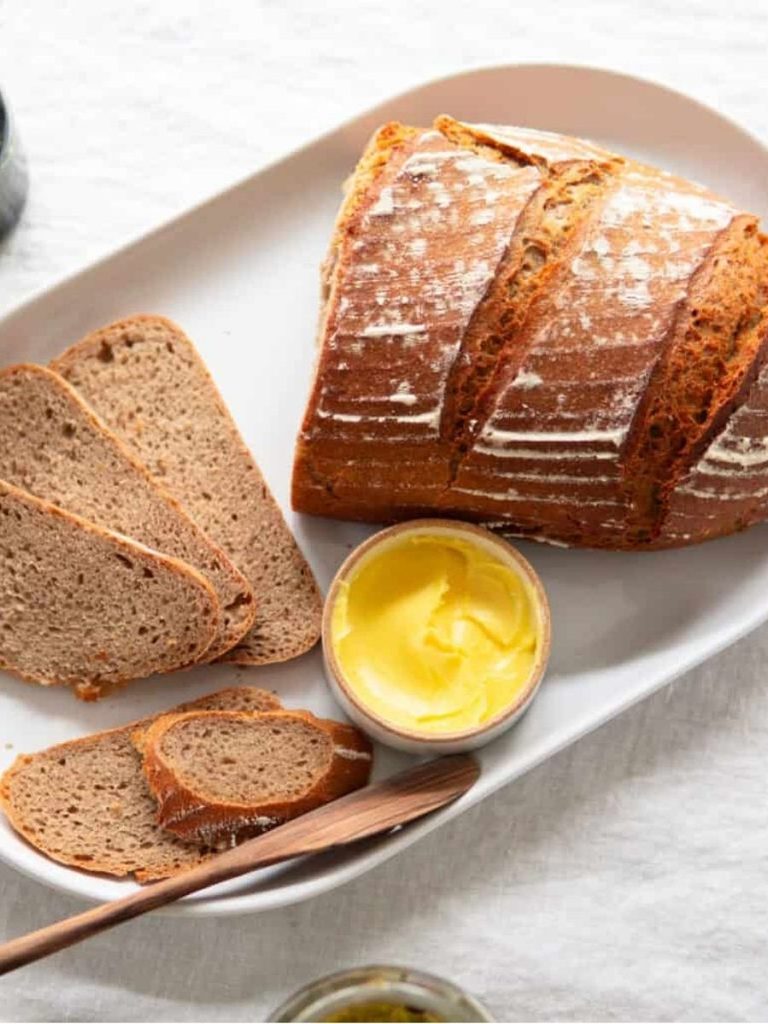
This hearty German-style sourdough bread combines white wheat flour and dark whole-grain rye flour for a deeply flavorful loaf with a beautifully rustic character.
The sourdough preferment develops complexity overnight, while a separate sponge helps create a lighter, more balanced interior.
The finished bread has a crisp, well-baked crust surrounding an airy yet satisfyingly substantial crumb.
A touch of yeast supports reliable rising, making this bread approachable even for less experienced sourdough bakers.
The optional onion variation, known as Zwiebelbrot, adds buttery, golden-brown onions that bring an extra layer of savory richness to the loaf.
Whether shaped into a round boule or an elongated batard, this traditional German-inspired bread delivers the comforting aroma, hearty texture, and bakery-style appeal of a freshly baked artisan loaf.
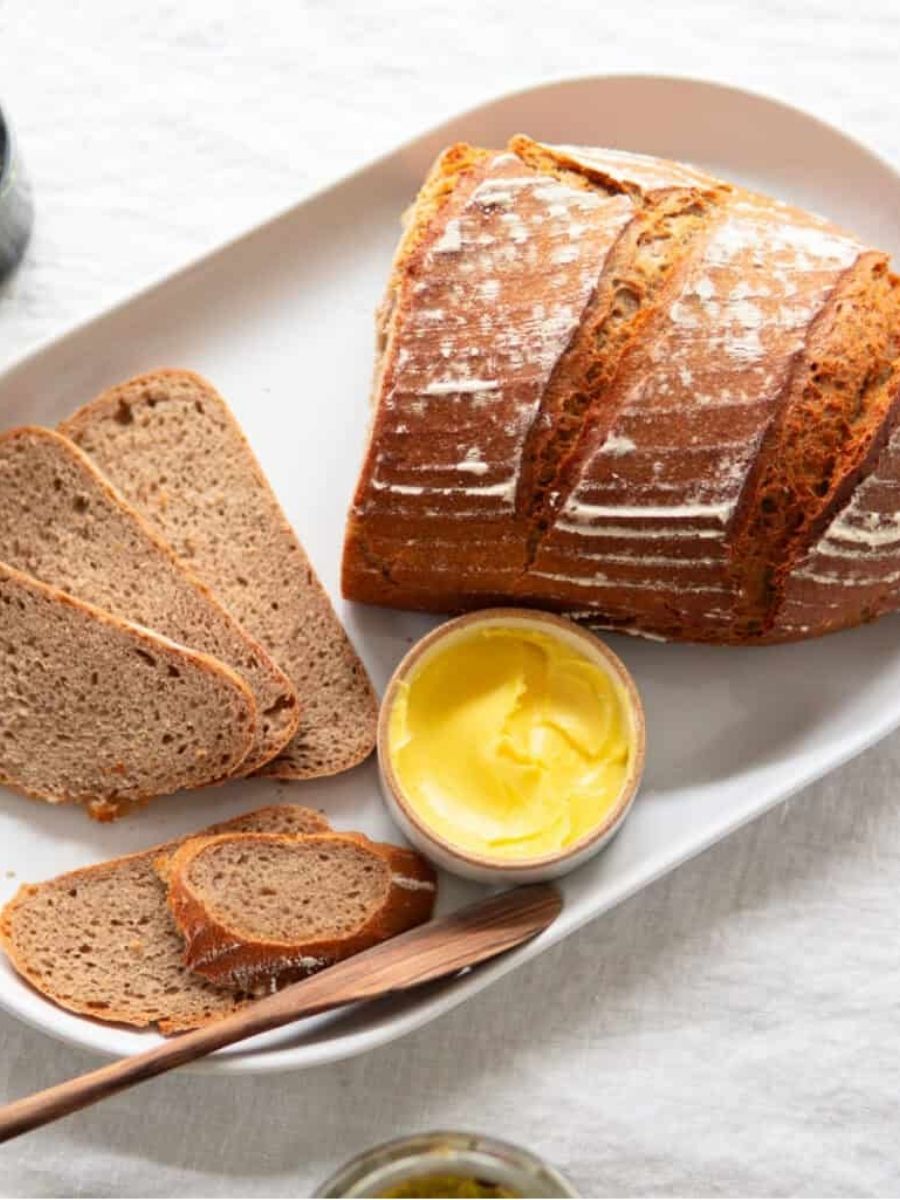

Traditional German Rye Sourdough Bread
Ingredients
Equipment
Method
- Make the Preferment: Combine the 4 grams salt, 195 grams lukewarm water, 90 grams dark rye flour, 100 grams all-purpose flour, and 40 grams sourdough starter in a medium bowl using a rubber spatula or spoon. Cover airtight and leave at room temperature for 10 to 12 hours.
- Make the Sponge: About 30 minutes before mixing the final dough, combine the 200 grams lukewarm water and 260 grams all-purpose flour in a small bowl. Mix by hand until a smooth dough forms. Cover airtight and let rest at room temperature for 30 minutes.
- Prepare the Onion Variation: If making Zwiebelbrot, trim, peel, and slice the large yellow onion. Cook it with the 14 grams butter over medium to medium-low heat, stirring occasionally, for about 10 to 15 minutes, or until golden brown and most of the moisture has cooked away. Avoid adding overly wet onions to the dough, as excess moisture can affect the dough consistency.
- Combine the Dough: Do not premix the main dough ingredients separately. Add the 70 grams lukewarm water, 9 grams salt, 175 grams dark rye flour, and 3 grams active dry yeast directly to the prepared preferment and sponge. Add the cooked onions at this stage if making the onion version.
- Knead the Dough: Knead by hand or use a stand mixer fitted with a dough hook for about 5 minutes, until all ingredients are fully incorporated and the dough is homogeneous and only slightly sticky.
- First Rise: Cover the dough airtight and let it rest at room temperature for 1 hour. By the end of this rise, the dough should have increased in size by approximately half.
- Shape the Loaf: Shape the dough into either a round boule or a long batard, depending on the shape of your proofing basket. Fold sections of the dough toward the center, pressing and working the folded edges into the middle until the loaf holds its desired shape.
- Prepare the Proofing Basket: Dust the proofing basket generously with white flour. Place the shaped loaf into the basket seam side down. Cover with a linen towel or the basket liner.
- Final Proof: Let the shaped dough rise at room temperature for 45 minutes.
- Preheat the Oven: Preheat the oven to 250°C (480°F). Place a casserole dish filled with hot water at the bottom of the oven to create steam.
- Prepare for Baking: Line a baking sheet with parchment paper. Carefully invert the proofed dough from the basket onto the prepared baking sheet. Check that there is still plenty of water in the casserole dish before transferring the bread to the oven.
- Score the Loaf, If Desired: Optionally score the surface of the dough to control where the loaf opens during baking. Scoring is not required.
- Bake the Bread: Transfer the loaf quickly to the hot, steamy oven and bake for a total of 60 minutes, following the source baking method.
Notes
- Use a kitchen scale to measure the ingredients accurately, as the recipe is written in grams.
- The preferment needs 10 to 12 hours at room temperature, so plan ahead before starting the bread.
- The sponge should rest for 30 minutes before it is combined with the preferment and main dough ingredients.
- Either a rye or wheat sourdough starter can be used for the preferment.
- Shape the dough according to the type of proofing basket you have, choosing either a round boule or long batard.
- Dust the proofing basket with white flour before adding the shaped dough to help prevent sticking.
- For the onion version, cook the onions until golden brown and allow most of their moisture to cook away before adding them to the dough.
- Scoring the loaf is optional and is not necessary for successful baking.
- The source recipe uses a hot-water-filled casserole dish in the oven to create steam during baking.
Chef’s Secret
The most important detail for the optional Zwiebelbrot version is controlling the moisture in the sautéed onions.
Cook them slowly until they are golden brown and most of their liquid has evaporated before incorporating them into the dough.
This helps preserve the intended dough consistency while still giving the bread its rich, savory onion flavor.
Serving Suggestions
Serve this hearty German rye sourdough bread sliced alongside soups, stews, or other warm meals.
Its crisp crust and flavorful interior also make it a wonderful choice for sandwiches or open-faced toppings.
Try it with butter, savory spreads, cheese, or other favorite toppings.
The onion version is especially appealing as part of a rustic bread basket or served alongside a comforting meal where its savory flavor can stand out.
Conclusion
This German-style sourdough bread brings together the hearty flavor of dark rye and the lighter texture of wheat flour in one rustic, bakery-inspired loaf.
With an overnight preferment, a short sponge rest, and a straightforward shaping and proofing process, the recipe creates a crisp crust and airy interior with plenty of character.
Make the classic version for a traditional loaf, or add golden sautéed onions for a flavorful Zwiebelbrot variation that adds an extra savory touch.
