
CookLibrary is a recipe curation and editorial platform. We research and curate recipes from public sources, considering ratings, reviews, comments, and feedback. We then refine and present them clearly for home cooks. We are committed to an ad-free, focused experience that makes discovering and preparing recipes easier.
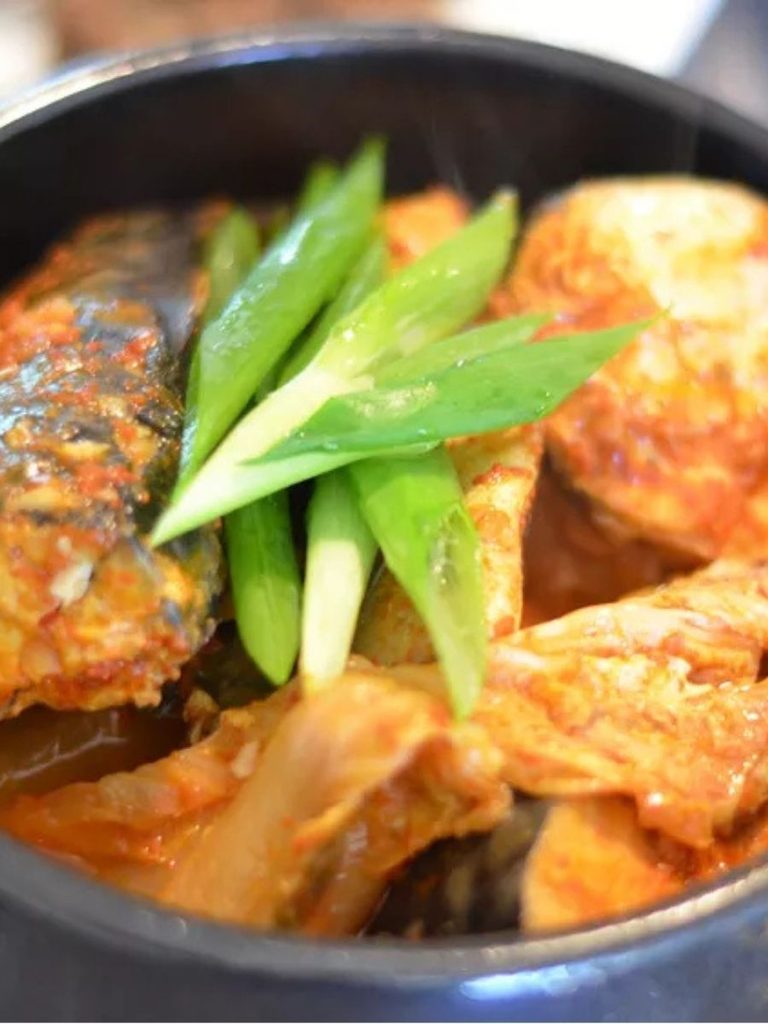
Godeungeo Jorim is a classic Korean-style braised mackerel dish that brings together rich fish, tender daikon radish, and a deeply seasoned red chile sauce.
The mackerel is cut into generous pieces before being gently cooked alongside daikon, allowing the flavors to develop as the sauce gradually reduces.
The seasoning combines gochugaru, gochujang, soy sauce, cooking wine, brown sugar, garlic, and fresh ginger.
Together, these ingredients create a sauce that is savory, spicy, slightly sweet, and aromatic.
Optional red and green chile peppers add another layer of fresh chile flavor, while the ginger and garlic provide warmth and depth.
As the dish cooks, the daikon becomes tender and absorbs the flavorful braising liquid.
Meanwhile, the mackerel remains rich and moist while taking on the bold Korean-inspired seasoning.
The sauce thickens as it reduces, coating the fish and radish with concentrated flavor.
Fresh green onions are added at the end for a bright finishing touch. Served alongside rice and other Korean-style side dishes, this braised mackerel makes a satisfying meal that highlights the naturally rich character of mackerel while balancing it with spicy, savory, and lightly sweet flavors.
It is a comforting choice for anyone who enjoys boldly seasoned seafood and traditional Korean flavors.
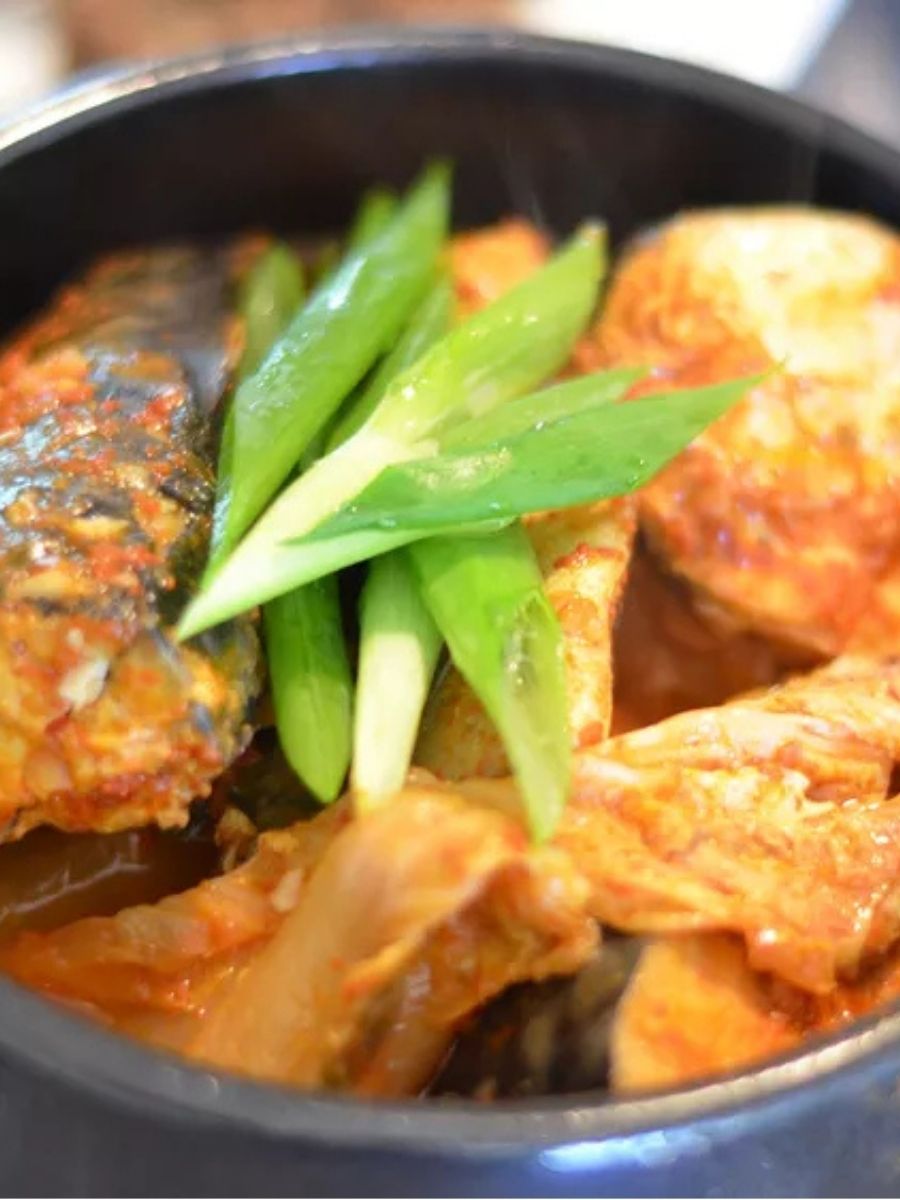

Korean Braised Mackerel Daikon
Ingredients
Equipment
Method
- Make the Sauce: Combine the minced red chile pepper, green chile pepper, cooking wine, gochugaru, gochujang, soy sauce, brown sugar, garlic, and ginger in a small bowl, then mix thoroughly until the ingredients are evenly combined.
- Cook the Daikon: Add the water and sliced daikon radish to a large pot and bring the mixture to a boil. Continue cooking for about 5 minutes, or until the radish becomes tender.
- Add the Mackerel: Place the prepared mackerel pieces into the pot with the cooked daikon, keeping the ingredients in the pot without stirring them together.
- Add the Sauce: Pour the prepared chile sauce evenly over the mackerel, making sure the seasoned mixture reaches the fish and braising liquid.
- Reduce the Cooking Liquid: Cook over high heat for about 10 minutes, occasionally spooning the cooking liquid over the mackerel without stirring the mixture. Continue until the liquid has reduced by approximately half.
- Simmer the Mackerel: Reduce the heat and partially cover the pot. Simmer for about 15 minutes, allowing the sauce to continue reducing until it becomes noticeably thicker.
- Garnish the Dish: Scatter the sliced green onions over the cooked mackerel before serving.
Notes
- Use mackerel that has been gutted, cleaned, and cut into 3-inch pieces before starting.
- The red and green chile peppers are optional, so they can be omitted without changing the main sauce ingredients.
- Cut the daikon into evenly sized ½-inch-thick pieces so they cook consistently.
- Avoid stirring the mackerel after adding it to the pot, as the source method calls for spooning the sauce over the fish instead.
- Partially cover the pot during the final simmer so the sauce can continue thickening.
- Mirin can be substituted for the cooking wine if desired.
Chef’s Secret
The most important technique in Godeungeo Jorim is handling the mackerel gently once it enters the pot.
Mackerel is tender and can break apart if the mixture is stirred repeatedly.
Instead, let the fish cook undisturbed while occasionally spooning the flavorful braising liquid over the pieces.
This keeps the cooking method consistent while helping the sauce coat the mackerel as it reduces.
Pay particular attention to the transition from the initial high-heat cooking to the final simmer.
The first stage reduces the liquid by about half, concentrating the seasoning, while the lower-heat simmer allows the sauce to thicken further around the fish and tender daikon.
Serving Suggestions
Serve Godeungeo Jorim hot alongside steamed rice, which provides a simple base for the rich, spicy braising sauce.
Korean-style side dishes can round out the meal, especially lightly seasoned vegetables or other small banchan.
Spoon some of the thickened sauce over the rice and add tender daikon pieces alongside the mackerel.
Finish with the sliced green onions already used in the recipe, or serve extra green onion on top for a fresh garnish.
Conclusion
Godeungeo Jorim brings together rich mackerel, tender daikon, and a deeply seasoned Korean chile sauce in one comforting dish.
The combination of gochujang, gochugaru, soy sauce, garlic, ginger, and brown sugar creates a savory, spicy, and lightly sweet flavor.
Served over rice, this braised mackerel makes a satisfying meal for anyone who enjoys bold Korean-inspired seafood.
