
CookLibrary is a recipe curation and editorial platform. We research and curate recipes from public sources, considering ratings, reviews, comments, and feedback. We then refine and present them clearly for home cooks. We are committed to an ad-free, focused experience that makes discovering and preparing recipes easier.
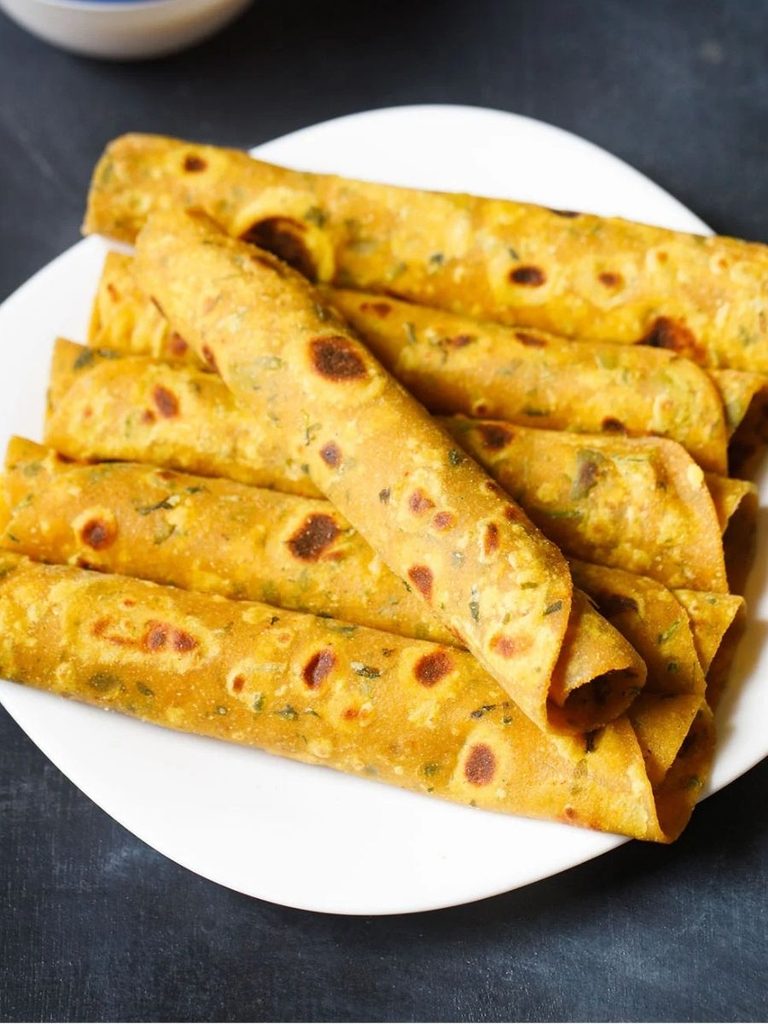
Methi Thepla is a beloved Gujarati flatbread that brings together fresh fenugreek leaves, whole wheat flour, gram flour, millet flours, yogurt, and aromatic spices in one soft, flavorful dough.
The fresh methi provides its distinctive earthy character and a gentle bitterness, while ginger, green chili, cumin, coriander, turmeric, and red chili add a warm, savory layer of spice.
The combination creates a flatbread that is fragrant without being overwhelmingly hot, making it versatile enough for breakfast, snacks, or a simple meal.
The dough is kneaded until soft and smooth, then divided into medium-sized portions and rolled into thin rounds.
Once cooked on a hot tawa, the theplas develop scattered golden spots while remaining pleasantly tender and pliable.
A little oil during roasting helps the surface cook evenly and gives the finished flatbreads their characteristic richness.
What makes this recipe especially appealing is its balance of textures and flours.
Whole wheat flour provides the main structure, besan contributes a subtle nuttiness, while bajra and jowar bring their own hearty qualities.
Freshly chopped methi is mixed directly into the dough, allowing its flavor to spread throughout every bite.
The finished theplas can be enjoyed hot, warm, or at room temperature, making them practical for breakfast, snacking, or packing for later.
They pair naturally with yogurt, mango pickle, chutney, or a simple vegetable dish, while a cup of masala or ginger chai makes them especially inviting as a snack.


Classic Gujarati Methi Thepla
Ingredients
Equipment
Method
- Prepare the Methi: Rinse the fenugreek leaves several times under running water to remove any dirt or mud. Drain them thoroughly, then chop the leaves finely.
- Combine the Flours: Add the whole wheat flour, gram flour, pearl millet flour, and sorghum flour to a large mixing bowl. If the millet flours are unavailable, replace them with 1¼ cups whole wheat flour and ½ cup gram flour.
- Add the Seasonings: Stir in the ginger paste, green chili paste, red chili powder, turmeric powder, cumin powder, coriander powder, and salt. Add 1 tablespoon oil and mix the dry ingredients thoroughly.
- Add the Methi: Add the finely chopped fenugreek leaves to the seasoned flour mixture and combine well so the leaves are distributed throughout the flour.
- Add the Yogurt: Pour in 4 to 5 tablespoons of curd and mix everything together. For a vegan version, use a small amount of water instead of the curd.
- Knead the Dough: Bring the mixture together and knead into a soft, smooth dough. Avoid adding extra water while kneading because the fresh methi leaves will release moisture.If the dough needs additional moisture, add more curd as required.
- Shape the Dough: Divide the finished dough into medium-sized portions and roll each portion between your hands to form a smooth ball.
- Roll the Thepla: Lightly dust one dough ball with flour and place it on a clean rolling surface. Using a rolling pin, roll it into a round flatbread approximately 7 to 8 inches in diameter.
- Heat the Tawa: Place a tawa or skillet over heat and allow it to become hot before cooking the rolled thepla.
- Cook the First Side: Carefully place the rolled thepla on the hot tawa. Cook until the first side is partly cooked, about one-fourth to one-half cooked. Faint air pockets appearing on the surface indicate that it is ready to flip.
- Oil the Thepla: Turn the thepla over and spread oil across the partially cooked side.
- Cook the Second Side: Flip the thepla again once the second side is about half-cooked, then spread oil over this side as well.
- Finish Cooking: Continue flipping the thepla a couple of times until golden spots appear across the surface and it is cooked evenly. Press gently with a spatula while cooking if needed to help it cook evenly.
- Hold the Cooked Thepla: Remove the finished thepla from the tawa and place it in a roti basket or suitable covered container. Repeat the rolling and cooking process with the remaining dough.
- Serve: Serve the Methi Thepla hot, warm, or at room temperature
Notes
- Flour balance: Keep whole wheat flour as the main flour. Using too much gram flour can make the thepla harder and drier, while reducing the wheat flour too much can make the dough difficult to roll.
- Dough consistency: Aim for a soft, smooth, pliable dough. If it feels hard, knead in a few tablespoons of curd or water. If it becomes sticky, add a little wheat flour.
- Methi moisture: Drain the fenugreek leaves thoroughly before chopping. The leaves naturally release moisture, so avoid adding water too quickly during kneading.
- Longer storage: For thepla intended for travel or storage over several days, use about 3 to 4 tablespoons of oil in the dough and omit the curd. The added oil helps maintain softness and supports longer storage.
- Spice level: Increase or decrease the green chilies, red chili powder, and ground spices according to your preferred level of heat.
- Roasting fat: Ghee can be used in place of oil when roasting the thepla.
- Alternative greens: Fresh spinach, moringa leaves, or amaranth leaves can be used in place of methi.
- Storage: Thepla made without curd can keep well for 3 to 4 days in an airtight container at room temperature. For freezing, wrap cooled thepla in foil, place them in an airtight freezer bag, and freeze for up to 1 month. Thaw in the refrigerator and reheat in a skillet or oven for a few minutes until warm.
Chef’s Secret
The most important detail for soft Methi Thepla is getting the dough consistency right before rolling.
Fresh fenugreek leaves naturally release moisture as they are mixed and kneaded, so resist the temptation to add water immediately.
Start with the curd and allow the chopped methi to contribute its moisture while the dough comes together.
The finished dough should feel soft, smooth, and pliable rather than stiff or excessively sticky.
A hard dough produces dry, firm thepla, while an overly sticky dough can tear during rolling.
If the dough feels too firm, add a little more curd and knead it again.
If it becomes sticky, incorporate a small amount of whole wheat flour until it becomes easy to handle.
Serving Suggestions
Methi Thepla is delicious served warm or at room temperature alongside plain curd, mango pickle, mango chutney, or mango chunda.
For a more substantial Gujarati-style meal, serve the flatbreads with a simple Batata nu Shaak.
They also make an excellent snack alongside Masala Chai or Ginger Chai.
When serving, keep the cooked thepla together in a roti basket or covered container so they remain soft and easy to enjoy.
Conclusion
Methi Thepla brings together fresh fenugreek, wholesome flours, aromatic spices, and a soft, pliable texture in a versatile Gujarati flatbread.
The lightly crisp golden spots from the tawa roasting complement the earthy methi and warm spices beautifully.
Enjoy it fresh, warm, or at room temperature with your favorite traditional accompaniments for a satisfying breakfast, snack, or simple meal.
