
CookLibrary is a recipe curation and editorial platform. We research and curate recipes from public sources, considering ratings, reviews, comments, and feedback. We then refine and present them clearly for home cooks. We are committed to an ad-free, focused experience that makes discovering and preparing recipes easier.
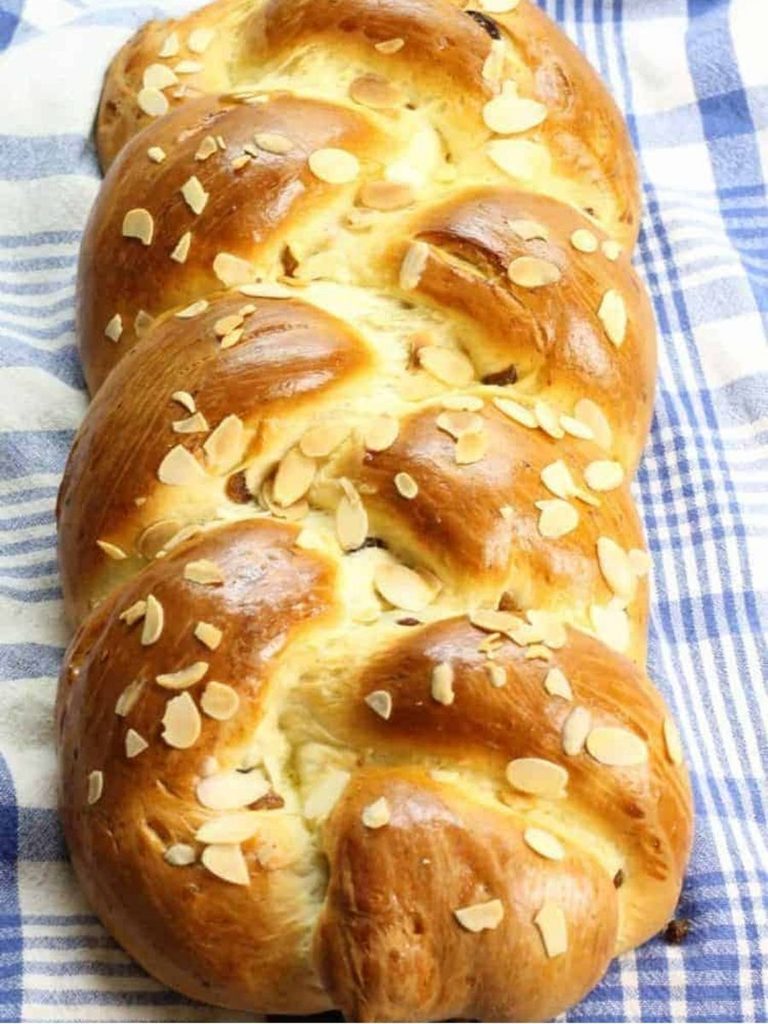
German Raisin Bread, or Rosinenbrot, is a soft, lightly sweet yeast bread that brings a traditional European touch to the breakfast table.
The loaf is made from a simple enriched dough combining all-purpose flour, sugar, slightly warmed milk, butter, egg, yeast, salt, and raisins.
After kneading, the dough develops a smooth, supple texture before the raisins are worked through it for little pockets of sweetness in every slice.
What makes this loaf especially appealing is its braided shape and golden almond-studded finish. The dough is divided into three portions, rolled into long strands, then braided into one attractive loaf.
A final rise helps create the soft, fluffy interior, while an egg-yolk-and-milk topping gives the crust a beautiful golden surface.
Sliced almonds add a delicate nutty crunch to the top without overwhelming the sweet bread.
The flavor remains pleasantly balanced rather than overly sugary, allowing the raisins to provide most of the fruity sweetness.
Its tender crumb makes it especially inviting when freshly sliced, whether served for breakfast, brunch, or a special holiday table.
The original recipe lists Rosinenbrot as a German bread traditionally associated with Easter and gives a total preparation time of 2 hours 15 minutes, including rising time, followed by 20 to 30 minutes of baking.
This braided raisin loaf is also versatile enough for occasions beyond Easter. Served fresh, it makes a lovely centerpiece for a breakfast spread, while leftovers can be kept in a bread box or paper bag to help maintain their texture.
Its combination of soft bread, sweet raisins, and crisp almond topping makes every slice feel special without requiring complicated ingredients.


Golden Braided Raisin Bread
Ingredients
Equipment
Method
- Activate the Yeast: Gently warm the milk in a saucepan until lukewarm, making sure it is not hot. If using active dry yeast, dissolve it in the warm milk and let it stand for about 5 minutes to activate. If using instant yeast, skip this activation step and add the yeast directly to the dry ingredients.
- Combine Dry Ingredients: Place the flour, sugar, and salt in a large mixing bowl and stir them together. Make a well in the center of the flour mixture.
- Form the Dough: Pour the warm milk and yeast mixture into the well, then add the soft butter and whole egg. Using a wooden spoon, gradually draw the flour in from the sides until everything comes together into a tacky ball of dough.
- Knead the Dough: Lightly flour the work surface and transfer the dough onto it. Knead for at least 15 minutes, continuing until the dough becomes very smooth, soft, and supple.
- First Rise: Shape the kneaded dough into a round ball and return it to the mixing bowl. Cover the bowl with a clean dishcloth and place it in a warm area of the kitchen. Let the dough rise for about 1 hour, or until it has doubled in size.
- Add the Raisins: Once the dough has risen, transfer it back to the work surface and gently flatten it. Scatter the raisins over the dough, fold the dough over itself twice, then knead until the raisins are evenly incorporated.If any raisins fall out during kneading, press them back into the dough or set them aside.
- Divide the Dough: Cut the dough into 3 equal pieces, keeping the portions as even as possible.
- Shape the Strands: Roll each piece into a long strand approximately 16 inches long and about 1 inch in diameter.
- Braid the Loaf: Place the three strands side by side and press their ends together at one end. Braid the strands by moving the outside strand over the middle strand repeatedly until the entire loaf is braided. Tuck the loose ends underneath the loaf to create a neat finish.
- Second Rise: Transfer the braided loaf to a sheet pan lined with parchment paper. Cover it with the dishcloth and let it rise for another 20 minutes.
- Prepare the Oven: Preheat the oven to 350°F and make sure the sheet pan is lined with parchment paper.
- Prepare the Topping: Once the loaf has become fluffy, combine the egg yolk and 1 teaspoon milk. Brush this mixture evenly over the surface of the risen braid, then sprinkle the sliced almonds over the top.Coarse sugar may also be added if desired.
- Bake the Bread: Place the topped loaf in the 350°F oven and bake for 20 to 30 minutes, until the bread is golden brown.
- Cool Before Slicing: Transfer the baked Rosinenbrot to a wire rack and allow it to cool before slicing.
Notes
- Use lukewarm milk for active dry yeast; milk that is too hot can kill the yeast.
- If using instant yeast, mix it directly into the flour mixture rather than activating it in the milk.
- Knead the dough for at least 15 minutes so it becomes very smooth, soft, and supple.
- Let the dough rise until it doubles in size rather than relying only on the clock.
- Work the raisins into the dough after the first rise so they remain distributed throughout the finished loaf.
- Keep the three dough strands approximately 16 inches long for a balanced braid.
- The almond topping is optional, and coarse sugar can also be sprinkled over the loaf if desired.
- Allow the bread to cool on a wire rack before slicing for cleaner pieces.
- For storage, keep the cooled loaf in a brown paper bag or bread box when possible, using plastic wrap if necessary to prevent it from drying out.
Chef’s Secret
The key to a particularly soft Rosinenbrot is giving the dough enough kneading time before the first rise.
Rather than stopping as soon as the ingredients form a ball, continue kneading for at least 15 minutes until the dough feels noticeably smooth, soft, and supple.
This is especially important because the raisins are added later, after the initial rise.
When incorporating them, flatten the risen dough first and scatter the raisins over the surface before folding it over itself twice.
Knead gently but thoroughly until the raisins are distributed throughout.
If a few raisins escape, simply press them back into the dough.
This method keeps the raisin pieces spread through the loaf while preserving the dough’s soft, fluffy character.
Serving Suggestions
Serve the cooled Rosinenbrot in thick slices for breakfast or brunch alongside butter, preserves, or your preferred sweet spread.
The golden almond topping provides enough texture and visual appeal to serve the bread on its own, while a little coarse sugar on top can add extra sweetness if it was included before baking.
For an Easter table, arrange slices on a serving board or platter alongside other breakfast favorites.
The loaf is best enjoyed fresh on the same day, but any leftovers can be stored in a brown paper bag or bread box and served as soon as possible.
Conclusion
German Rosinenbrot is a beautifully braided loaf that combines a tender, fluffy crumb with sweet raisins and a golden almond topping.
Its lightly sweet flavor makes it suitable for breakfast, brunch, Easter gatherings, or other special occasions.
Careful kneading, proper rising, and gentle incorporation of the raisins help create the soft texture that makes this traditional-style bread so enjoyable.
