
CookLibrary is a recipe curation and editorial platform. We research and curate recipes from public sources, considering ratings, reviews, comments, and feedback. We then refine and present them clearly for home cooks. We are committed to an ad-free, focused experience that makes discovering and preparing recipes easier.
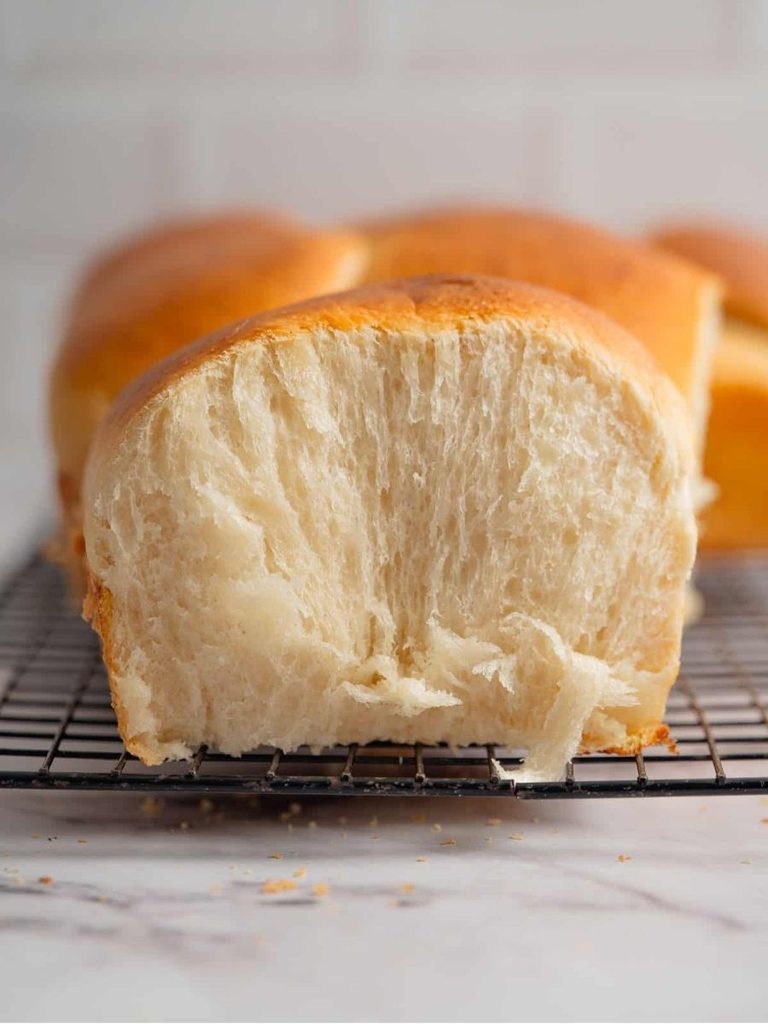
This sourdough milk bread is a wonderfully soft, enriched loaf made especially tender through the use of tangzhong.
The tangzhong begins by gently cooking bread flour and whole milk into a smooth paste, which becomes the foundation for the dough’s soft, plush texture.
A ripe sourdough levain brings the characteristic fermented depth of sourdough bread, while milk, eggs, sugar, milk powder, and butter create a rich, delicate crumb.
The dough is kneaded until glossy and elastic, with softened butter incorporated gradually to help develop its smooth structure.
After the initial rise, the dough is divided into six pieces, shaped into neat rolls, and arranged three at a time in two loaf pans.
A second rise allows the shaped dough to become puffy, light, and full before baking.
Once brushed with egg wash, the loaves bake until deeply golden on top and hollow-sounding when tapped.
The finished bread has an invitingly soft interior beneath a beautifully browned crust, making it especially appealing for slicing and serving fresh.
Because the recipe produces two loaves, it is also practical when you want extra bread for later.
With its combination of tangzhong, active sourdough, whole milk, eggs, sugar, and butter, this milk bread offers a rich yet balanced character.
The overnight levain adds another layer of flavor while the carefully developed dough gives the bread its tender, elastic structure.
This recipe is a lovely choice for anyone who enjoys homemade sourdough bread but wants a softer, richer loaf than a traditional lean sourdough.
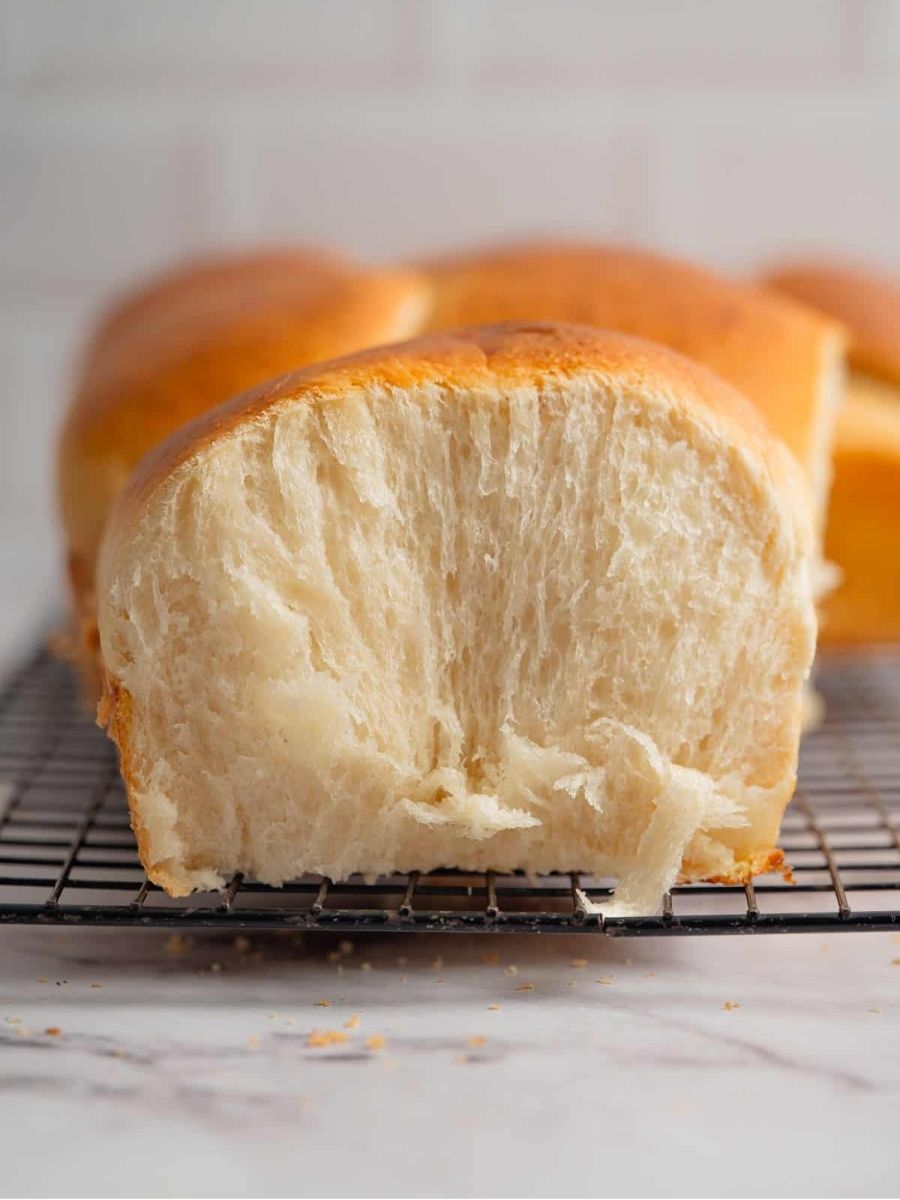

Soft Sourdough Milk Bread
Ingredients
Equipment
Method
- Prepare the Levain: Combine 70 g bread flour, 70 g water, and 20 g sourdough starter in a small jar, cover it, and leave it at room temperature overnight until the mixture has doubled in size and looks bubbly.
- Cook the Tangzhong: Whisk 48 g bread flour and 240 g whole milk together in a small saucepan until smooth, then cook over low-medium heat while stirring until the mixture thickens into a smooth paste.
- Cool the Tangzhong: Scrape the cooked tangzhong into the mixer bowl and allow it to cool before adding the remaining dough ingredients.
- Form the Dough: Add 600 g bread flour, 200 g cold whole milk, 70 g granulated sugar, 24 g milk powder if using, 2 large eggs, 12 g salt, and all of the ripe levain to the cooled tangzhong, then mix until a shaggy dough forms.
- Knead the Dough: Increase the mixer speed and knead the dough for about 5 minutes, continuing until it becomes smoother.
- Add the Butter: Add the 70 g room-temperature unsalted butter in small pieces, then knead for approximately 12–15 minutes until the dough becomes glossy and elastic and begins pulling away from the sides of the bowl.
- Check Dough Strength: Let the dough rest for 5 minutes, then stretch a small piece very thin; it should stretch without tearing, indicating that the gluten has developed sufficiently for the windowpane test.
- Bulk Rise: Transfer the dough to a lightly oiled bowl and let it rise in a warm place at about 24°C to 26°C / 75°F to 79°F until it has increased in volume by approximately half and feels lighter and puffier, which can take about 3–5 hours depending on the temperature.
- Create a Warm Proofing Space: If the room is cold, place the covered dough in a switched-off oven with a mug of boiled water to create a warm, humid environment, replacing the mug when it cools while ensuring the space never becomes hot enough to melt the butter.
- Chill the Dough: Refrigerate the dough for about 20 minutes to make it easier to handle and shape.
- Prepare the Loaf Pans: Grease or line two 9×5-inch loaf pans in preparation for the shaped dough.
- Divide the Dough: Deflate the dough and transfer it to a floured work surface, weigh it, and divide it into 6 equal pieces.
- Rest the Dough Pieces: Shape each portion into a smooth ball and let the six balls rest for 10 minutes.
- Roll the Dough: Roll each ball into a long oval approximately 30 cm / 11 inches long.
- Shape the Logs: Fold the long sides of each oval toward the center, then roll it up from the short end into a neat log and pinch the seam closed.
- Fill the Pans: Place the shaped logs seam-side down in the prepared loaf pans, arranging 3 logs in each pan.
- Final Rise: Let the shaped loaves rise somewhere warm at approximately 24°C to 26°C / 75°F to 79°F until they become puffy, soft, full, and doubled in size, with the pieces touching; this can take about 3–5 hours depending on temperature.
- Preheat the Oven: Heat the oven to 180°C / 350°F once the loaves are ready to bake.
- Prepare the Egg Wash: Whisk together 1 large egg and 1 tablespoon water until combined.
- Brush the Loaves: Use a pastry brush to coat the tops of both risen loaves evenly with the prepared egg wash.
- Bake the Bread: Bake the loaves at 180°C / 350°F for about 35 minutes, until they are deeply golden and sound hollow when tapped.
- Cool the Loaves: Remove the baked loaves from their pans and allow them to cool completely before slicing.
Notes
- Feed the sourdough starter with 20 g starter, 70 g water, and 70 g flour for the levain, then let it rise overnight.
- Levain timing can vary according to room temperature; a cooler environment may slow fermentation, while a warmer space may speed it up.
- The tangzhong should be cooked until it becomes a smooth, thick paste before being transferred to the mixer bowl.
- The butter should be at room temperature so it can be incorporated gradually into the dough.
- Use the windowpane test to check gluten development before moving on to the bulk rise.
- During both rises, look for the described visual cues rather than relying only on the clock, since fermentation time depends on temperature.
- Chilling the dough for about 20 minutes makes it easier to divide and shape.
- Allow the baked loaves to cool completely before slicing for the best texture.
Chef’s Secret
The most useful technique for this milk bread is paying close attention to dough strength before beginning the bulk rise.
After kneading in the butter, give the dough a short 5-minute rest, then take a small piece and gently stretch it.
If it can become very thin without immediately tearing, the gluten has developed well enough to continue.
This windowpane check is particularly helpful here because the dough contains several enriching ingredients, including milk, eggs, sugar, and butter.
Rather than judging the dough only by kneading time, use its appearance and elasticity as your guide.
A glossy, elastic dough that pulls away from the mixer bowl and passes the stretch test is ready for the next stage.
Serving Suggestions
Slice the completely cooled milk bread and serve it fresh for breakfast or a snack.
Its soft texture works well alongside butter, jam, or other favorite spreads.
You can also toast slices lightly and serve them with a sweet topping, or use the tender bread as the base for a simple sandwich.
Since the recipe makes two loaves, one loaf can be enjoyed fresh while the second can be reserved for later servings.
Conclusion
This sourdough milk bread combines a bubbly overnight levain with a creamy tangzhong and enriched dough for two beautifully soft loaves.
Whole milk, eggs, sugar, milk powder, and butter give the bread a rich texture while sourdough contributes its distinctive character.
The carefully developed dough bakes into golden loaves with a tender, elastic interior.
With its practical shaping method and clear fermentation cues, this recipe is a rewarding choice for homemade enriched sourdough bread.
